
Beyond SME Loyalty Program Software: How Pixalink Powers Enterprise Rewards Across Southeast Asia
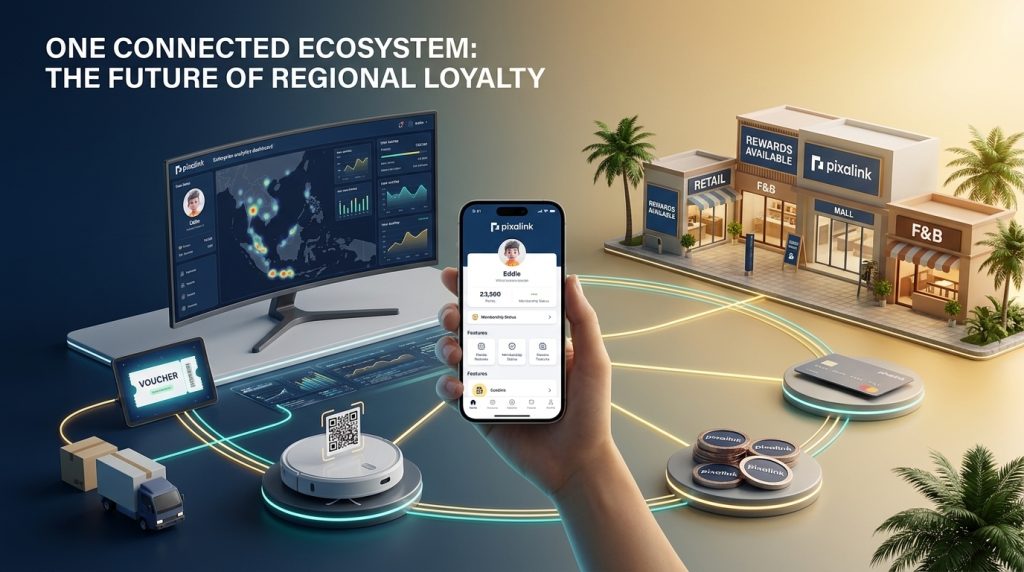
Short answer: Pixalink is not only loyalty program software for SMEs. It can serve as enterprise loyalty infrastructure for malls, banks, manufacturers and multi-brand ecosystems across Malaysia, Singapore and Southeast Asia. Pixalink connects the customer portal, management backend, points engine, voucher catalogue, partner integrations, reporting and custom settlement workflows needed to operate loyalty at scale.
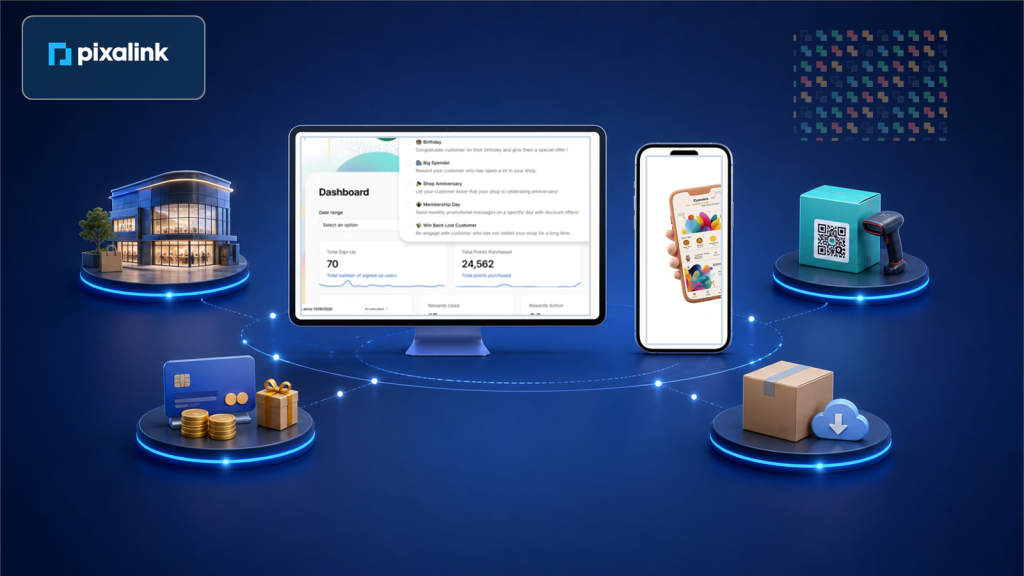
One connected loyalty foundation can coordinate customer experiences, business operations and partner ecosystems.
For a single merchant, loyalty may begin with a digital member card, points and birthday vouchers. At enterprise scale, the same idea becomes an operating ecosystem involving thousands or millions of customers, multiple business units, outside partners, high transaction volumes and financial obligations between participating parties.
That is where Pixalink’s role expands. It can power what customers see and use on the frontend while supporting the rules, records and workflows that enterprise teams manage on the backend.
For a mall, this can mean one mall-wide loyalty experience shared by many tenants. For a bank, it can mean the engine behind credit-card points and reward claims. For a manufacturer, it can connect products sold through distributors back to the people who ultimately buy and use them.
Enterprise loyalty is more than a points system
A basic points system records an earn-and-redeem transaction. An enterprise loyalty platform must coordinate an entire value chain.
It needs to answer questions such as:
- Who is the customer, and which permissions or consent records apply?
- Which business unit, outlet, tenant, card programme or product generated the transaction?
- Who funded the points or voucher?
- Where can the reward be redeemed?
- What happens when a transaction is cancelled, refunded, duplicated or disputed?
- Which partner is responsible for a digital code, physical product or delivery?
- How should participating parties reconcile and settle the value exchanged?
- Which data should appear in customer, management, partner and finance reports?
Pixalink brings these connected needs into one configurable loyalty operating model:
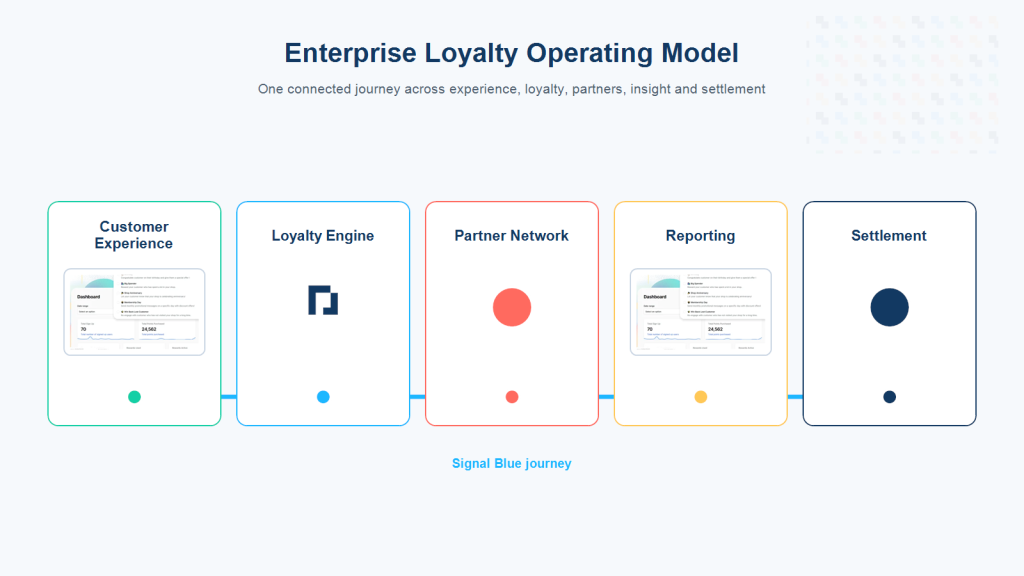
Enterprise loyalty links the customer experience with programme rules, participating partners, reporting and settlement.
| Enterprise layer | What it supports |
|---|---|
| Customer experience | Branded, no-download portal for points, rewards, vouchers, memberships and activity |
| Loyalty engine | Earning, deduction, expiry, tier, redemption and eligibility rules |
| Voucher operations | First-party and third-party voucher inventory, unique codes, validation, status and redemption tracking |
| Enterprise management | Organisation, space, outlet, tenant, campaign and staff controls |
| Integration | Connections with POS, ecommerce, payment, banking, partner and fulfilment systems according to project scope |
| Data and reporting | Customer records, transaction history, programme performance, redemption activity and exportable operational data |
| Reconciliation and settlement | Configured reporting and settlement workflows for participating tenants, partners or programme owners |
The result is not simply another digital loyalty card. It is an infrastructure layer connecting customers, operators, partners and programme economics.
Scenario 1: A mall needs one loyalty programme across many tenants

A mall-wide programme gives shoppers one convenient loyalty experience across participating tenants.
When does a mall need enterprise loyalty program software?
A mall needs enterprise loyalty program software when it wants to build a direct relationship with shoppers while allowing many tenants to participate under one programme.
Without a mall-wide system, each tenant may run a separate membership programme. The mall sees footfall but has limited visibility into who visits, which categories they shop across, what campaigns bring them back or how rewards influence movement between tenants.
A mall loyalty programme becomes especially valuable when:
- Tenants use different POS systems or have different technical capabilities.
- Shoppers should earn points at one tenant and redeem benefits elsewhere.
- The mall wants to reward total visits, event participation or cross-category spending.
- Tenant-funded and mall-funded vouchers must be controlled separately.
- Management needs asset-wide insights without losing tenant-level reporting.
- Finance teams need consistent reconciliation and settlement records.
How Pixalink can power the mall frontend and backend
On the frontend, shoppers access a mall-branded customer portal to join the programme, check points, browse rewards, store vouchers and view campaigns without downloading another mobile app.
On the backend, mall management can operate the broader programme while participating tenants work within the access, campaign and reporting boundaries defined for them. Points can be issued through suitable POS integrations, transaction uploads, receipt-based validation or other agreed workflows.
Pixalink’s voucher layer can support mall-funded rewards, tenant-funded offers and third-party e-vouchers. Each reward can carry its own eligibility, availability, validity and redemption rules. The programme can also record where value was earned and redeemed, creating the basis for multi-tenant reconciliation and a custom settlement process.
This gives the mall a customer relationship that extends beyond a car-park entry, event registration or single receipt. It also gives tenants access to a shared growth channel that would be difficult for smaller retailers to build independently.
Illustrative composite case study: A two-property lifestyle mall group
The following is an illustrative composite scenario. The organisation, figures and results are modelled examples, not an audited Pixalink client case study.
A lifestyle mall group in Malaysia operates two properties with 128 participating retail, dining and service tenants. Before launching a shared programme, tenant campaigns were disconnected, receipt validation was manual and the finance team needed seven to ten business days to reconcile monthly reward activity.
The mall introduces a shared loyalty programme powered by Pixalink:
- Shoppers join through a QR code and use a mall-branded, no-download customer portal.
- Integrated tenants issue points through their POS connection, while other tenants use receipt submission or controlled staff workflows.
- Customers can earn mall points across participating tenants and redeem mall-funded or tenant-funded rewards.
- Voucher ownership, issue source, redemption location and value are recorded for reporting.
- Management receives group-level performance views, while tenant reports show only the activity relevant to each participant.
- Finance exports a standard settlement file showing funded value, redeemed value, reversals and net positions by tenant.
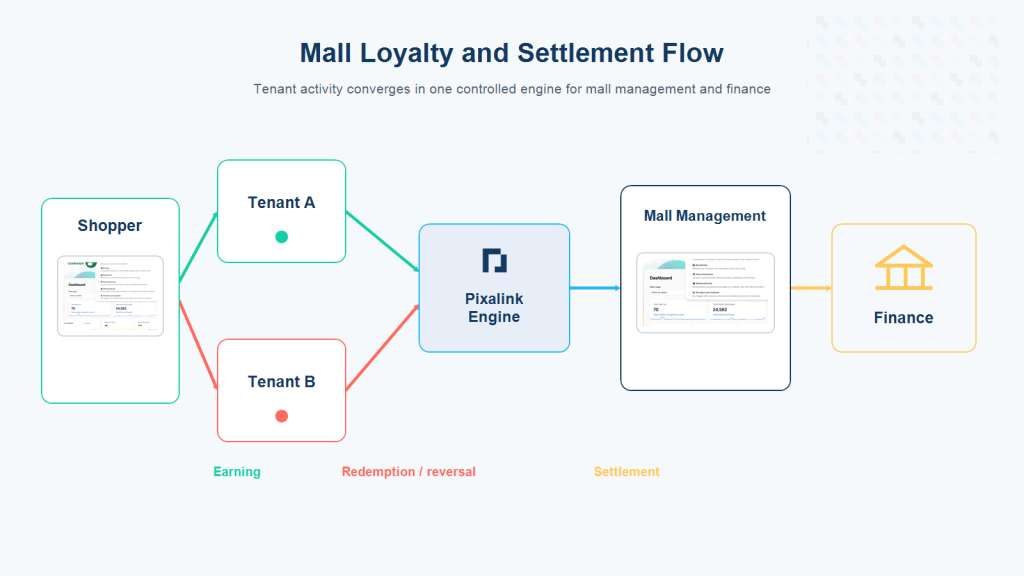
Each earn, redemption and reversal can be attributed to the correct tenant before reconciliation and settlement.
Modelled nine-month outcomes:
- Member registration-to-first-earn conversion rises from 47% to 69%.
- The share of active members shopping across two or more categories rises from 21% to 32%.
- Voucher redemption increases from 18% to 29% after rewards are segmented by category and visit behaviour.
- Monthly reconciliation falls from an average of eight business days to three.
- Reward-related tenant disputes decline by 46% because each issue, redemption and reversal has a consistent record.
For the mall, growth comes from better shopper retention, stronger cross-tenant participation and clearer evidence of campaign performance. For tenants, the shared programme creates reach beyond their existing customer lists. For finance and management, it replaces fragmented spreadsheets with a consistent operating record.
Scenario 2: A bank needs to connect credit-card points with reward fulfilment
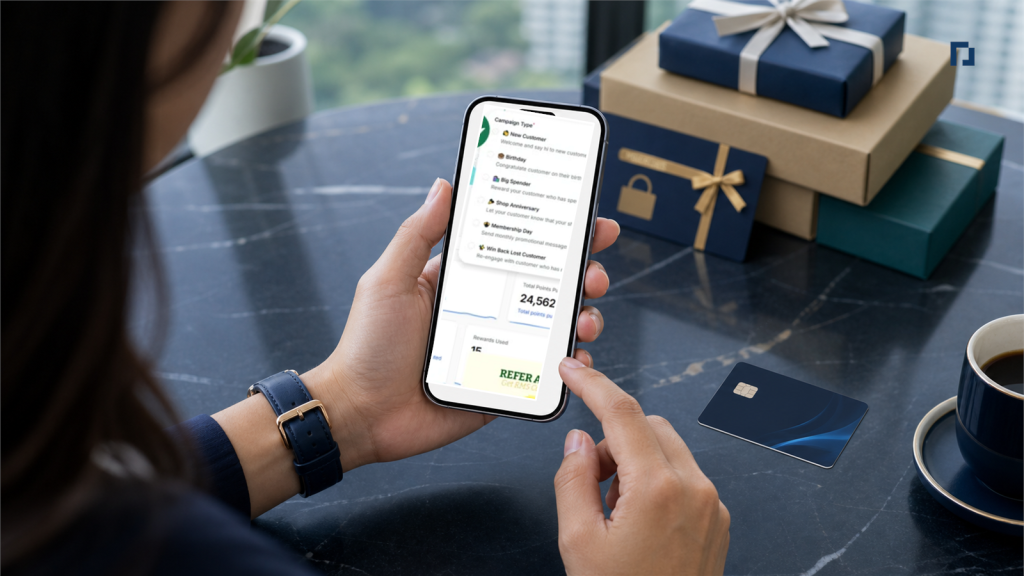
The visible customer journey is simple, while the rewards engine coordinates eligibility, inventory and fulfilment behind it.
When does a bank need a credit card rewards platform?
A bank needs a credit card rewards platform when points accounting, reward catalogues, partner inventory, customer claims, delivery and settlement involve multiple systems or organisations.
The visible part of a banking rewards programme is simple: a cardholder checks a points balance and chooses a reward. Behind that action, the programme may need to:
- Confirm the cardholder and available points.
- Apply conversion, eligibility and campaign rules.
- Reserve or deduct the correct points amount.
- Assign a unique digital voucher code or create a physical-product order.
- Send fulfilment details to a rewards or logistics partner.
- Return claim, delivery, failure or cancellation status to the bank.
- Reverse points when an eligible transaction fails.
- Reconcile voucher inventory, partner fees, fulfilled orders and programme liability.
Pixalink can power the loyalty and rewards layer within this partner ecosystem. The bank or card processor remains the source of approved card and points information. Voucher providers supply digital inventory. Logistics and fulfilment specialists manage physical delivery. Pixalink coordinates the customer-facing rewards experience, programme rules, claims, voucher assignment, status records and integration flow defined for the project.
Its voucher management system supports points-to-reward conversion, unique third-party voucher inventories, white-label reward catalogues and redemption reporting. For enterprise banking projects, APIs and custom workflows can connect those capabilities with the bank, partner and settlement environments.
Illustrative composite case study: A regional bank modernises card rewards
The following is an illustrative composite scenario. The organisation, figures and results are modelled examples, not an audited Pixalink client case study.
A regional bank serving Malaysia and Singapore has 620,000 active cardholders, 42 reward providers and three fulfilment partners. Its previous rewards process relies on separate catalogue, call-centre, voucher and delivery systems. Digital voucher delivery can take one business day, while customers have limited visibility into physical reward status.
The bank deploys a Pixalink-powered rewards layer:
- Eligible cardholders enter a white-label rewards portal through the bank’s authenticated journey.
- The bank supplies approved points balances and programme eligibility through an integration.
- Pixalink displays the relevant catalogue and applies the configured points-to-reward rules.
- A successful digital claim assigns a unique partner voucher and returns it to the customer’s reward wallet.
- A physical-product claim is routed to the correct fulfilment partner with a trackable status reference.
- Failed or cancelled fulfilment triggers the agreed exception and points-reversal workflow.
- Operations and finance teams receive consistent claim, fulfilment, inventory and settlement records.
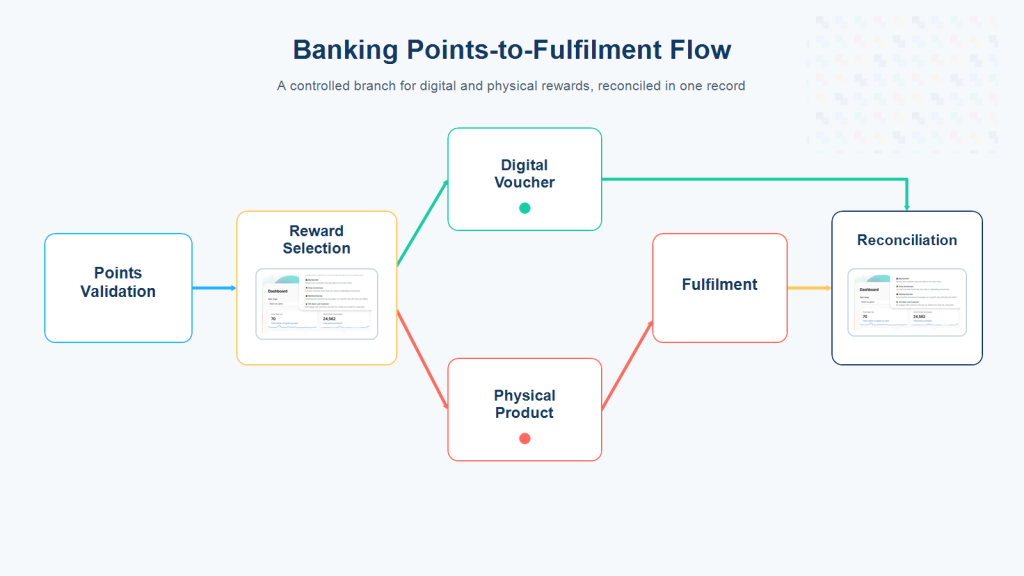
A connected rewards flow can carry a valid claim from points deduction to digital delivery or logistics fulfilment.
Modelled twelve-month outcomes:
- Median digital voucher delivery falls from the next business day to under five minutes for valid, in-stock claims.
- Successful claim completion rises from 86% to 95% after customers receive clearer eligibility and inventory status.
- Reward-related support contacts fall by 39% per 1,000 claims because customers can see claim and fulfilment information.
- New partner reward campaigns move from a four-week operational setup to approximately eight working days using standard catalogue and voucher-import processes.
- Repeat reward participation among active redeemers rises by 16%, giving the bank more opportunities to reinforce card usage and partner offers.
The value is not limited to faster redemption. A connected bank rewards platform makes the programme easier to operate, gives partners cleaner information and creates a more dependable experience from points deduction to voucher delivery or physical fulfilment.
Scenario 3: A manufacturer needs product traceability and direct consumer data
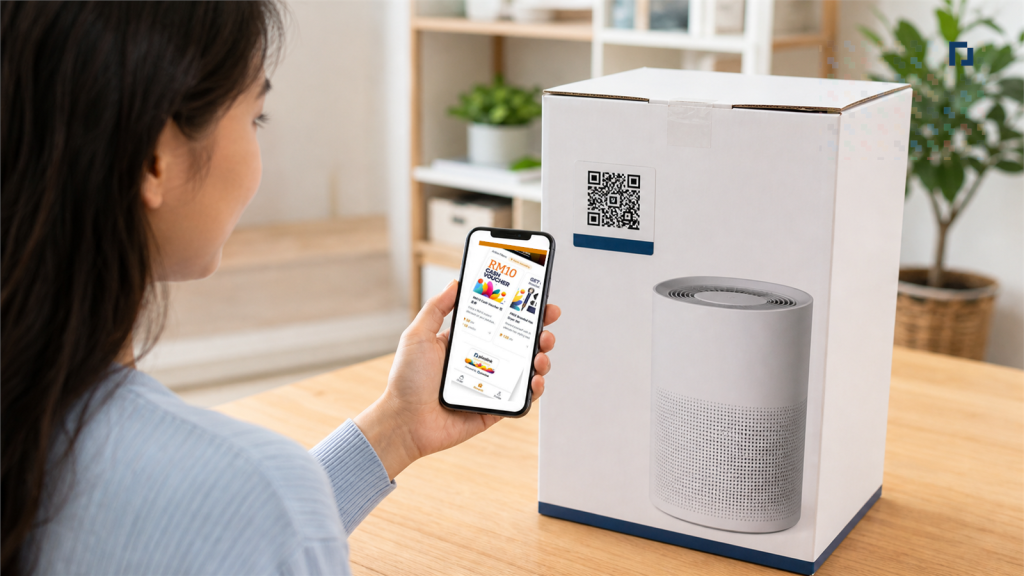
Product activation can turn an anonymous retail sale into a consented direct relationship with the end consumer.
When does a manufacturer need loyalty and product traceability software?
A manufacturer needs loyalty and product traceability software when products reach consumers through distributors, dealers, marketplaces and retailers—but the brand owner receives little information about the final buyer or how the product is used.
Traditional sell-in data tells a manufacturer what it shipped to a distributor. It does not always show who bought the product, which campaign influenced the purchase, whether the item was activated, whether the buyer needs warranty support or which accessories and services are relevant next.
A connected consumer programme can close that gap. Depending on the implementation, a customer may scan a unique product code, submit a receipt, register a warranty, answer a preference question, join a promotion or claim points and rewards. Each interaction can connect the product or batch with a consented customer record.
This creates two important data types:
- First-party data: Information the brand collects directly through its own customer relationship, such as registration, purchase, warranty, points and redemption activity.
- Zero-party data: Information the customer intentionally provides, such as product preferences, household needs, preferred communication or future purchase interests.
Pixalink can connect these interactions through CRM records, forms, receipt or code-based flows, loyalty points, vouchers, campaigns, analytics and a branded customer portal. The exact unit-level or batch-level traceability design, validation rules and distributor integrations are configured according to the product and supply-chain requirements.
Illustrative composite case study: A consumer-appliance brand reconnects with end buyers
The following is an illustrative composite scenario. The organisation, figures and results are modelled examples, not an audited Pixalink client case study.
A home-appliance manufacturer sells through distributors, marketplaces and more than 600 retail points across Malaysia and Singapore. The brand has reliable distributor shipment data but captures verified end-consumer information for only 12% of eligible units. Marketing teams also struggle to connect campaigns with registrations, warranty activity and accessory purchases.
The manufacturer introduces a Pixalink-powered consumer activation programme:
- Eligible products carry a unique or batch-linked QR code, with receipt submission used where additional purchase validation is required.
- Customers scan the code to register the product, activate the warranty and enter the branded customer portal.
- Registration creates a first-party CRM record linked to product, retailer, location and campaign information permitted by the programme.
- Customers voluntarily provide selected zero-party preferences in exchange for relevant care tips, warranty reminders or rewards.
- Verified buyers receive points or vouchers, while duplicate or invalid claims enter an exception workflow.
- The brand segments customers by product family, ownership stage and consented interests for follow-up campaigns.
- Management compares registrations, claims, retailer activity, campaign attribution and repeat purchases through a consistent reporting layer.
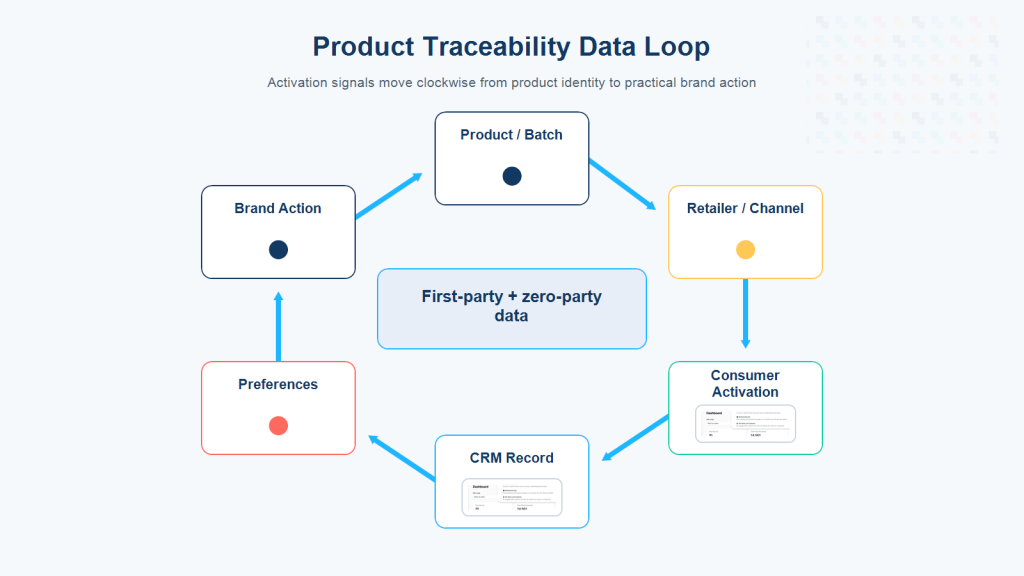
A traceable activation loop links products and channels with consumer records, preferences and future brand actions.
Modelled twelve-month outcomes:
- Verified end-consumer registration rises from 12% to 38% of eligible units.
- The share of registrations attributable to a specific retailer or campaign rises from 24% to 63%.
- Warranty-completion time falls from approximately seven minutes on a separate form to under two minutes in the guided activation flow.
- Response to product-care and accessory campaigns becomes 2.1 times higher among registered owners than untargeted contact lists.
- Repeat accessory purchases among registered owners rise by 13% within six months, while irrelevant mass promotions are reduced.
For the manufacturer, growth comes from finally seeing beyond the distributor. The brand can build direct relationships, improve product support, measure campaigns, encourage repeat purchases and use consented consumer insight to guide future products.
Three enterprise scenarios, one connected loyalty foundation
The industries are different, but their core requirement is similar: connect a customer action with the correct programme rule, business participant, reward, record and next step.
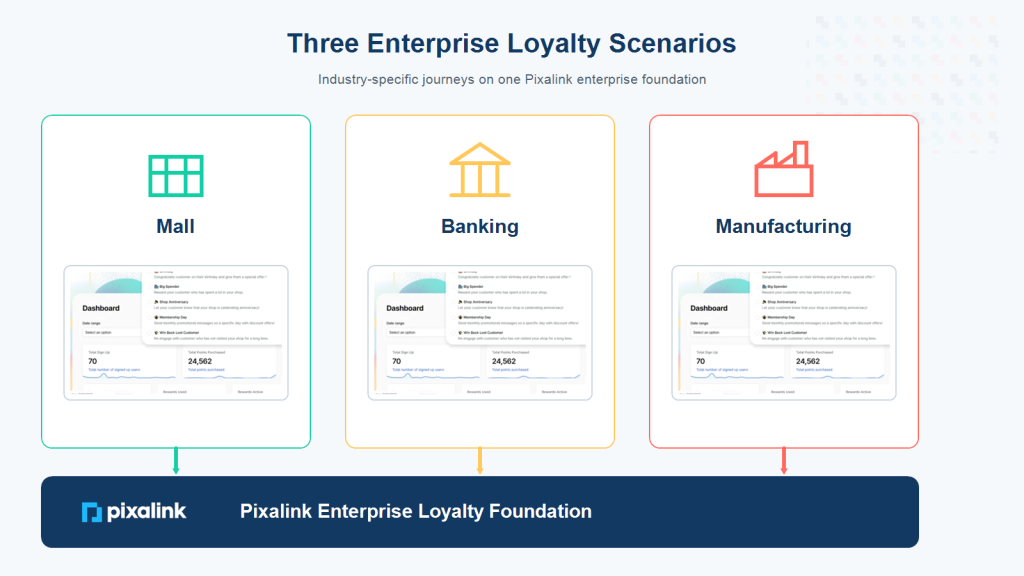
Malls, banks and manufacturers have different operating models but share the same need for a connected loyalty foundation.
| Industry | Customer action | Operational complexity | Growth value |
|---|---|---|---|
| Shopping mall | Earn or redeem across participating tenants | Tenant access, cross-merchant rules, funding and settlement | More repeat visits, cross-category spending and tenant participation |
| Banking | Convert card points into a digital or physical reward | Bank integration, partner inventory, fulfilment, exceptions and reconciliation | Higher programme participation and a more dependable cardholder experience |
| Manufacturing | Register or validate a purchased product | Product identity, retailer or distributor context, consent and campaign attribution | Direct consumer relationships, better targeting and stronger repeat revenue |
Pixalink’s role can include:
- A white-label, no-download customer experience.
- Customer, member and consent-aware CRM records.
- Configurable points, rewards, vouchers, tiers and eligibility.
- First-party and third-party voucher inventory.
- Organisation, space, outlet, tenant and staff-level controls.
- Import, export, API, POS and ecommerce integration options.
- Customer, transaction, points, voucher and redemption reporting.
- Custom reconciliation and settlement outputs for the enterprise operating model.
Every enterprise project has a different system landscape. Pixalink does not replace the bank, POS, card processor, courier, distributor or financial institution. It provides and connects the loyalty layer so those parties can participate in one controlled customer journey.
Enterprise loyalty readiness checklist
Before selecting customer loyalty program software for a mall, bank or manufacturer, define the following:
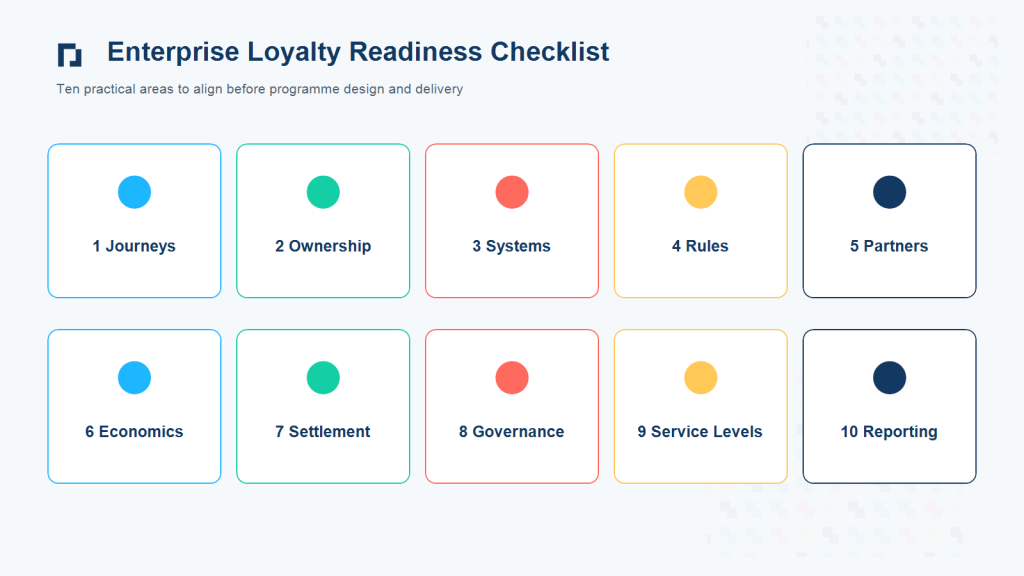
Enterprise readiness begins with clear decisions about journeys, ownership, integrations, economics, governance and service levels.
- Customer journey: How will customers join, identify themselves, earn, claim and receive value?
- Programme owners: Which business units, tenants or partners can create, fund, approve and view rewards?
- Systems of record: Where do approved transactions, points, cardholder, product, inventory and fulfilment data originate?
- Integration scope: Which POS, ecommerce, banking, logistics, distributor or partner systems need real-time APIs, scheduled files or manual workflows?
- Programme economics: Who funds points and rewards, and when does liability move between parties?
- Settlement rules: Which events trigger a payable, receivable, fee, reversal or reconciliation adjustment?
- Exception handling: What happens when a receipt is invalid, stock is unavailable, delivery fails or a transaction is refunded?
- Data governance: What first-party and zero-party data will be collected, for what purpose and with which permissions?
- Scale: What are the expected members, transactions, reward claims, tenants, partners, outlets and peak campaign volumes?
- Reporting and SLA: Which operational, finance, partner and management reports are required, and who owns each service level?
These decisions determine whether an enterprise loyalty programme remains a marketing campaign or becomes dependable business infrastructure.
Frequently Asked Questions
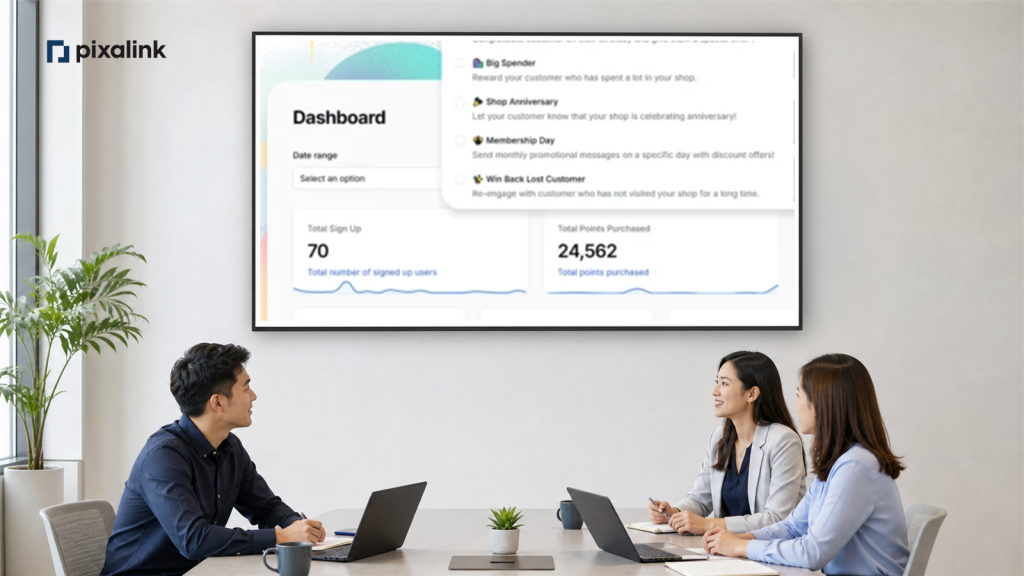
Enterprise loyalty decisions become clearer when customer journeys, partner responsibilities and system boundaries are mapped together.
Is Pixalink only loyalty software for SMEs?
No. Pixalink supports SME loyalty programmes, but its platform can also be configured for enterprise and multi-party environments such as shopping malls, multi-merchant networks, banking rewards and manufacturer consumer programmes.
What does enterprise loyalty program software do?
Enterprise loyalty program software connects customer enrolment, points, rewards, vouchers, programme rules, partners, integrations, reporting and reconciliation at a scale that basic digital stamp cards cannot manage.
How does a mall loyalty programme work across different tenants?
A mall loyalty programme gives shoppers one membership experience while recording earn, redemption and campaign activity against the relevant tenants. Rules, reports and custom settlement workflows determine how value is funded, shared and reconciled.
Can Pixalink support credit-card points and rewards claiming?
Yes, as a configured enterprise implementation. Pixalink can power the rewards catalogue, points-to-reward journey, voucher assignment, claim records and partner integration layer, while the bank, card system and fulfilment partners retain their respective responsibilities.
Can Pixalink manage physical reward delivery?
Pixalink can connect a reward claim to a logistics or fulfilment partner and maintain the relevant status workflow. Physical warehousing and delivery remain with the appointed specialist unless separately included in the enterprise scope.
How does Pixalink help manufacturers collect first-party data?
Pixalink helps manufacturers create direct, consented consumer interactions through product registration, receipt or code validation, warranties, forms, points, vouchers and a branded customer portal. Those activities can create customer records linked to products, channels and campaigns.
What is the difference between first-party and zero-party data?
First-party data is collected from a customer’s activity with the brand, while zero-party data is information the customer intentionally shares, such as preferences or purchase intentions. Both can improve personalisation when collected transparently and used with appropriate consent.
Does Pixalink support multi-tenant settlement?
Pixalink can support custom reporting, reconciliation and settlement workflows for enterprise programmes. The final rules depend on the parties involved, funding model, transaction sources, reversal logic and required finance integrations.
Can Pixalink integrate with existing enterprise systems?
Yes. Pixalink supports API, import, export, POS and ecommerce integration patterns, with each enterprise integration scoped around the systems, data contracts, security requirements and service levels involved.
Build loyalty as enterprise infrastructure
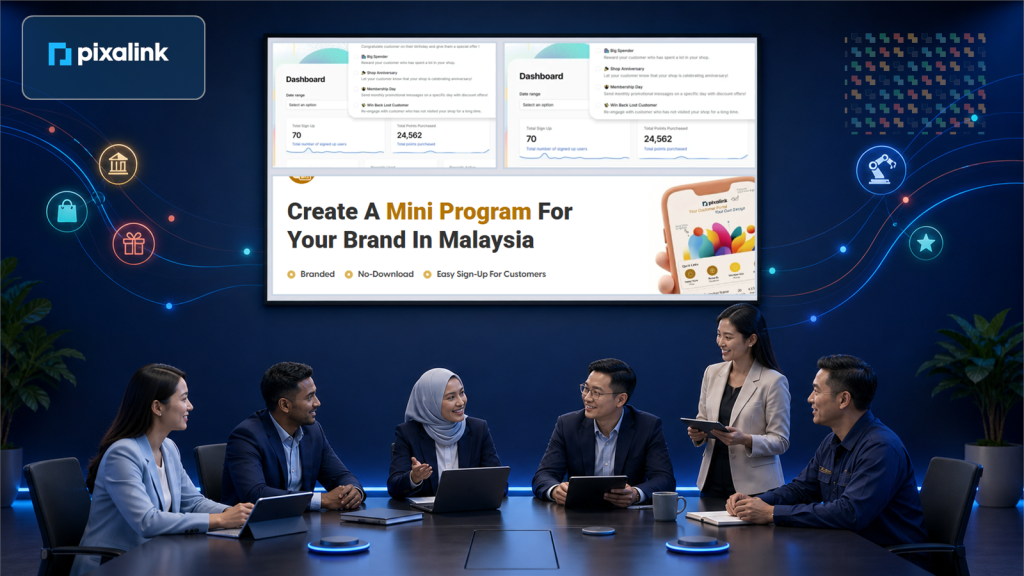
The right loyalty foundation brings customer experience, operations, partners and measurable growth into one programme.
The strongest loyalty programmes do more than distribute points. They create a dependable connection between customers, business operations, partners and measurable growth.
For a mall, that connection can turn separate tenants into a shared customer ecosystem. For a bank, it can carry a cardholder from points balance to successful reward fulfilment. For a manufacturer, it can reconnect products in the supply chain with the people who ultimately buy and use them.
Pixalink provides the customer-facing and operational loyalty foundation needed to make those journeys work across Malaysia, Singapore and Southeast Asia.
Planning an enterprise loyalty programme? Speak with Pixalink about your customer journey, integration landscape, partner model and settlement requirements.