






Feature

Loyalty Points System

The engine behind

repeat purchases.

Give customers a reason to come back. Members earn points when they shop, check their balance on their phone and choose a reward for their next visit. You decide how much they earn and what they can claim.

Purchase

Earn points

Claim rewards

A smiling customer checks her loyalty points on her phone at a Kuala Lumpur café counter beside a QR code stand, while the barista smiles back.

+86 points earned

Thanks for your RM86.50 order. You are 14 points from a free drink.

Points balance

1,240 pts

Gold

Next reward

260 pts to go

Gold tier

1.5× points

Everything connects to Pixalink

One points engine at the centre of your business.

Hover a module to see how it plugs into your loyalty points system.

Explore how each module connects to your loyalty points system.

  • Core Points Engine

    Earn rates, burn rules, expiry logic and real-time balances.

  • Credit Wallet Ledger

    Prepaid credit — customers top up, spend and track balances across outlets.

  • Tiered Membership

    Bronze, Silver and Gold tiers that unlock perks and motivate spend.

  • POS Integration

    Real-time sync with your POS for automatic points at checkout.

  • Payment Gateway

    Top-ups and payments via FPX, cards and e-wallets.

  • E-commerce Integration

    Sync points with WooCommerce, Shopify or a custom store.

  • 360° Customer Profiles

    Visits, spend, balance, tier and communication log in one view.

  • Customer Segmentation

    Auto-segment VIP, at-risk, new and dormant customers.

  • Analytics Dashboard

    Revenue attribution, campaign ROI, retention and outlet comparison.

  • Accounting Integration

    Reconcile loyalty transactions with your accounting software.

  • WhatsApp Integration

    Welcome messages, promotions, win-backs and broadcasts.

  • Win Back Lost Customers

    Detect inactive customers and re-engage them with WhatsApp offers.

  • Cohort Analysis

    Track retention by sign-up date or behaviour over weeks and months.

Loyalty points explained

What is a loyalty points system?

A loyalty points system lets a business award points for qualifying purchases or other approved activities. Customers collect the points in a member account and use them to claim rewards under the business’s rules. The business decides how points are earned, what rewards cost and which conditions apply.

With Pixalink, members can open a branded web portal from a link or QR code to check their balance and browse rewards. A supported POS connection can record qualifying purchases automatically. Staff can also record points through the admin panel.

From purchase to reward

How do loyalty points work?

Follow one customer from a purchase to a reward. This sample programme gives 1 point per RM1 of eligible spend; an RM5 voucher costs 100 points. Tap a step to replay it.

Aisyah’s points balance

60 pts

60 points from earlier visits. 40 more unlocks the RM5 voucher.

Portal screens rebuilt from the Pixalink Explore codebase. Data is illustrative.

Viewing is different from claiming. Members can browse freely. Their points balance changes when they claim a reward. The voucher can then be used under its own terms.

What does the reward cost? RM100 of eligible spend earns a voucher worth RM5 to the customer. For the business, the cost depends on what the voucher covers and whether the customer uses it.

All amounts in this journey are illustrative.

Central integration hub

One merchant. One member. Different ways to earn.

Choose a sale to see how it would appear on Aisyah’s member record. Each example starts with 60 points and earns 1 point per RM1, rounded down.

Choose an illustrative sales channel
ALAisyah LimExample member

One customer view

Member balance100 pts60 existing + 40 earned
Reward availableRM5 voucher100 points to claim
Transaction historyRM40 at the tillIdentify the member before settling an eligible sale.
Member balance146 pts60 existing + 86 earned
Reward availableRM5 voucher100 points to claim
Transaction historyRM86.50 online orderMatch the order to the member and check which order status qualifies.
Member balance210 pts60 existing + 150 earned
Reward availableRM5 voucher100 points to claim
Transaction historyRM150 eligible invoiceConfirm the invoice workflow first. An authorised staff entry is one option when a direct connection is unavailable.

These are alternative example transactions. POS, e-commerce and accounting workflows depend on the systems and connections your business uses.

Why points, why now

The four shifts behind it.

Paper cards and blanket discounts were built for a different customer. Here is what changed.

A café barista laughs with a regular customer as she hands him his takeaway coffee at the counter.

01

Repeat customers are often your most profitable segment.

Regulars already know what they like and come back without a heavy promotion. A points balance gives them a visible reason to keep choosing you.

A boutique owner in a floral hijab smiles over her coffee while reviewing sales charts on a laptop in her clothing store.

02

First-party data is the new advantage.

Every member record links purchases to a real customer you can recognise and, with consent, message. It is data you own, not audiences you rent.

Three friends with shopping bags laugh together as they look at one phone in a bright Malaysian shopping mall.

03

Customer expectations have shifted.

Customers expect to check balances and rewards on their phone in seconds, not carry a card or ask staff to look them up.

A smiling shop owner scans a purchase for a customer at a busy homeware store counter while other shoppers queue with baskets.

04

Points programmes drive measurable revenue.

Every point earned and every reward claimed is recorded, so you can compare member visits, spend and reward cost instead of guessing.

Photos are AI-generated illustrations. Results depend on your offer, customers and how the programme is run.

Business benefits

Why use a points-based loyalty programme?

A useful points programme makes the next visit easier to picture and gives your team a way to recognise members.

Give the next visit a purpose

A member with 80 points can see that a 100-point reward is close. Make progress easy to understand and the reward worth returning for.

80 / 100 pts · 20 to go

Recognise customers who return

A points balance gives an ongoing purchase history a visible benefit. Configured tier multipliers can let higher-tier members earn faster.

Offer value with clear boundaries

Choose a product, service add-on or voucher your business can support. Define the reward cost and conditions around the behaviour you want to encourage.

Learn which rewards people use

Review points earned, points spent and rewards used. If customers collect but rarely claim, revisit the threshold, reward choice or explanation.

A short, consistent rule helps staff explain the programme. Review reward cost alongside repeat visits to see whether the programme is meeting its goal.

Points in practice

See points in everyday business settings.

Different purchases need different rewards. Here are three ways a points programme could fit a normal customer visit.

AI-generated illustrations with example programme rules. Each bar segment is one qualifying visit; the marker shows the reward threshold.

A customer checks reward progress at a Malaysian café counter.

Cafés & restaurants

Make regular purchases count.

A guest spends RM20 on a drink and meal. At a sample rate of 1 point per RM1, that visit earns 20 points.

5 visits × 20 points = a 100-point drink reward

Reward

Put the earning rule where the guest orders and show progress in the member portal. Choose a threshold around your normal visit and reward cost.


A shopper checks a reward balance while an assistant prepares a purchase bag.

Retail shops

Connect purchases to a useful reward.

A shopper spends RM120 and earns 120 points. In this sample programme, an RM15 voucher costs 300 points.

360 earned − 300 to claim = 60 points left

Reward

Three similar qualifying purchases reach 360 points. Make exclusions clear, including sale items and purchases paid partly with a voucher, and confirm the treatment your setup supports.

A salon client checks her reward progress after an appointment at reception.

Salons & beauty services

Recognise return appointments.

A client spends RM150 and earns 150 points at 1 point per RM1. In this sample programme, 500 points can claim an RM25 voucher.

600 earned − 500 to claim = 100 points left

Reward

Four similar qualifying visits reach the reward. Choose benefits around a normal appointment cycle, such as a useful add-on or a next-visit offer.

Earning rules

How can customers earn points with Pixalink?

Start with the activities your programme should recognise. Then make the earning rule clear to customers and staff.

Explore referrals →
In store
Online orders
Tier bonus
Referrals
Receipt claims

Qualifying purchases

Staff can record points, or a supported POS connection can award them when an eligible sale is settled. The system, member identification and programme setup determine the flow.

Read the POS earning guide ↗

Tier multipliers

A configured 2× tier can earn 100 points from an eligible RM50 purchase at 1 point per RM1. Whole points round down at the end. RM15 × 1 × 1.5 earns 22 points.

Read the tier multiplier guide ↗

Referrals and receipt claims

A configured referral programme can reward eligible invitations. Where receipt claims are enabled, AI assists with capture and staff review the submission before deciding whether to award points. Each route needs its own conditions.

Explore AI Receipt Upload →

Programme operations

Clear for customers.
Manageable for your team.

A points programme works better when everyone understands the balance, the reward conditions and what happens when a sale changes.

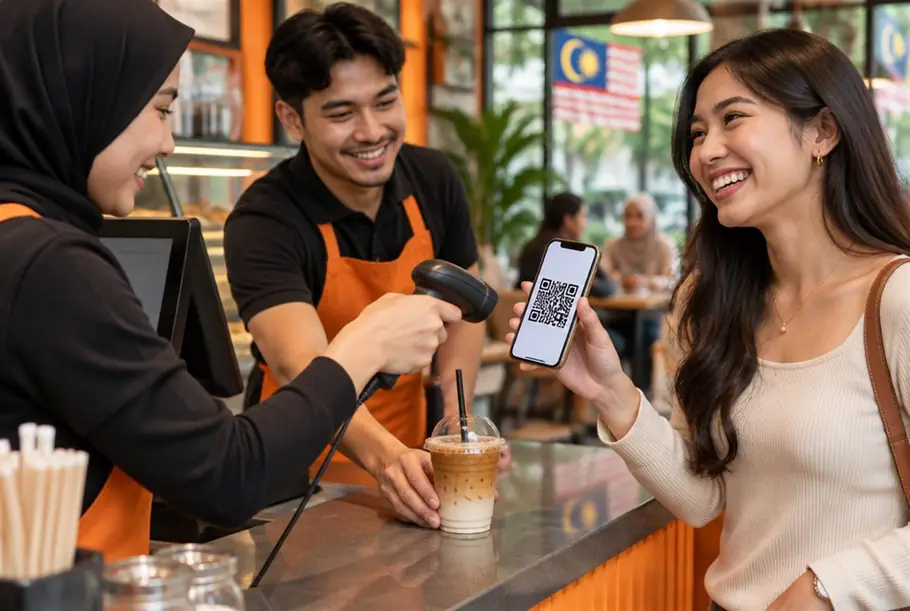
A smiling customer shows a QR code on her phone while a café cashier scans it and a barista hands over an iced coffee.

Voucher validated

RM5 off · 100 pts claimed

A balance members can check

The branded web Customer Portal gives members a place to check points, view their activity and browse available rewards through a link or QR code. No separate customer app download is needed for the web portal.

Visible reward conditions

A sufficient balance is only part of eligibility. Dates, stock, claim limits, visibility and other configured conditions can affect a reward claim. Explain the important terms before the customer spends points.

Explore Rewards & Vouchers →

Expiry with a plan for existing members

The Pixalink team can enable a validity period. Each batch of points has its own expiry date under the documented setup. Agree how existing balances will be treated, and configure available reminders and portal display options as needed.

Read the point expiry guide ↗

Recorded additions, claims and corrections

Point history helps staff understand balance changes. Authorised staff can make supported corrections and record a reason. Refund behaviour depends on the connected system and workflow; confirm it during setup.

Read how point transactions work ↗

Points simulator

See how fast members reach a reward.

See how the earning rate, tier and existing balance change progress towards a reward. Try your own figures using the sample rules below.

Illustrative rules only. Whole points are rounded down at the end. Actual earning, exclusions and reward availability follow your configured programme. This example does not forecast visits, revenue or profit.

Choosing your rewards

Points, stamps, vouchers or wallet credit?

Mechanic What customers build or receive When it may fit
Loyalty points
A balance built from qualifying activities, spent on rewards Purchases vary in value or customers choose between rewards
Digital stamp card
Progress towards a defined visit or campaign target A simple repeat purchase, such as a selected drink
Voucher
A benefit with its own validity and redemption terms A specific promotion, gift or next-visit offer
Wallet credit
A separate stored balance used under the business’s payment rules A prepaid arrangement, where supported and agreed

A points balance is separate from wallet credit. Claiming a voucher with points does not make points cash. Pick the mechanic customers can understand and staff can explain.

Points analytics

Measure what happens after points are issued.

Start with a goal, such as more qualifying return visits or better reward use. Compare with the period before launch, accounting for seasonality and other promotions.

Explore loyalty analytics →
A smiling café owner in an apron reviews colourful sales charts on a tablet behind his counter in a Penang shophouse café.

Returning members · illustrative

Look beyond the points balance

Repeat purchase frequency and time between visits.

The share of purchasing members who return.

Rewards claimed, vouchers used and reward cost.

Customer questions, complaints and staff effort.

Regulars may be more likely to join in the first place. Compare similar customers over the same period when judging whether points changed how often they visited.

Frequently asked questions

Questions about loyalty points systems.

Understand the rules before you choose your first reward.

What is the difference between a loyalty points system and a loyalty programme?

The programme is the complete set of member benefits, rules and communication. The points system is the part that records earning, balances and spending on rewards. A programme can also include tiers, stamp cards or vouchers.

How many points should a customer earn per ringgit?

There is no universal rate. Choose a rate together with the reward price, typical customer spend and reward cost. Make the rule easy to explain and show customers how close a normal purchase takes them to a reward.

Can customers check points without downloading an app?

Yes. Pixalink’s web Customer Portal lets members access their points and available rewards through a link or QR code. A separately published native app is a different scope.

Can Pixalink work with our existing POS?

Pixalink has documented integrations for supported systems. Compatibility, member matching, earning, voucher use and refund behaviour depend on the connection and setup. Share your POS name and version during the demo so the required workflow can be checked.

Can points expire?

Yes, expiry can be enabled by the Pixalink team with an agreed validity period. Each batch of points has its own expiry date under the documented setup. Existing balances need a transition plan, and reminder/display settings should be agreed separately.

What happens to points after a refund?

The points issued for the refunded purchase may need to be reversed. Supported integrations and authorised staff correction tools handle different parts of this process. Confirm full and partial refunds, points already spent and returned rewards for your specific connection.

Does spending points lower a customer’s tier?

Redeeming a reward does not itself lower a tier. Tier progress uses qualifying purchase points. Refunds and expiry can affect that calculation. Confirm your tier configuration during setup.

Can we offer a free product instead of a discount?

A points programme can give customers reward choices such as a selected product or voucher. Define the point cost, stock, validity and claim conditions, and check the desired fulfilment process with Pixalink.

Will a points system guarantee more sales?

No. A useful reward can support repeat visits, but results also depend on your product, service, customer habits, communication and programme design. Measure customer behaviour and reward cost rather than assuming that issuing more points means more profit.

What should we prepare for a demo?

Bring your business type, outlet count, POS or online-store details, a typical transaction value and one reward you would like to offer. Pixalink can walk through how a customer joins, earns points, checks progress and claims that reward.

Make every ringgit count towards the next visit.

Bring a typical sale and one reward you’d like to offer. We’ll show how a customer earns points, checks their balance and claims that reward.