

History

12 eras of customer loyalty

The history of loyalty programs, from tokens to AI.

Loyalty programs grew out of co-operative dividends, saved wrappers and trading stamps, then moved into airline miles, customer data, coalition cards, phones and AI. Follow 12 illustrated eras and the lesson each one leaves for businesses today.

Every era cited
Malaysia spotlight
Lessons for today
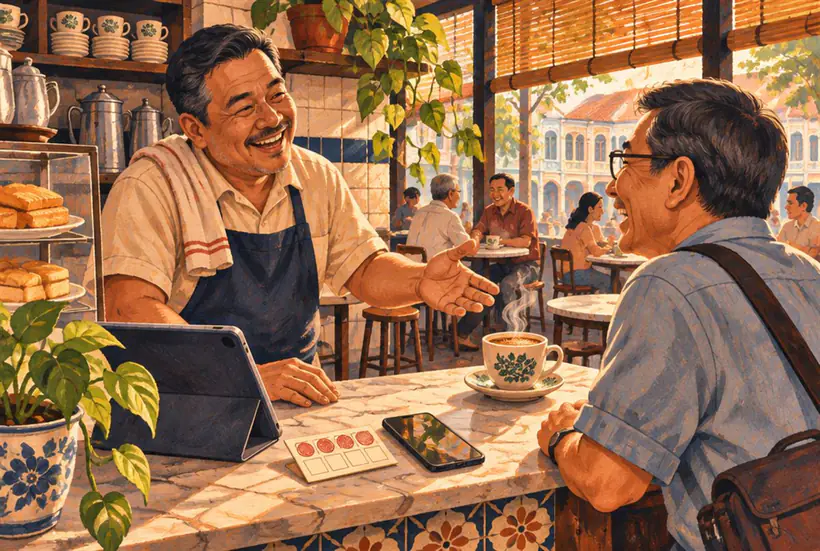
Illustration of a winding road of time: an ancient grain stall, a medieval shop, a co-operative ledger, a 1950s trading-stamp counter, a 1980s airport desk, a 1990s supermarket card and a Malaysian café where a customer holds a phone showing a gift.

Illustration · AI-generated

S&H Green Stamps

1,200 stamps a book

AAdvantage launches

1 May 1981

Quick answer

When did loyalty programs start?

There is no single first loyalty program. The clearest documented beginnings are 19th-century: co-operative member dividends from 1844, wrapper premiums from 1851 and S&H Green Stamps from 1896. Airline miles (1981), data-driven cards (1995), coalitions such as BonusLink in Malaysia (1998), mobile rewards and AI followed.

The eras overlap. They describe selected developments, not a single invention or a universal sequence.

Pixalink Sdn Bhd, Malaysia · Published and updated 8 November 2026

Key dates, all cited below

1844

Rochdale Pioneers open their co-operative store

1851

B.T. Babbitt offers premiums for soap wrappers

1896

Sperry & Hutchinson begin issuing trading stamps

1981

American Airlines launches AAdvantage

1995

Tesco introduces Clubcard

1998

BonusLink launches in Malaysia

2011

Starbucks rolls out mobile payment nationally in the US

Evolution of loyalty programs

How the loyalty mechanic evolved

Ten ideas, each building on the last. Under each one is the Pixalink feature that carries the idea today.

  1. 1669TokenValue held with the issuerCredit Wallet
  2. 1844DividendMembership pays backPaid Membership
  3. 1851PremiumProof of purchase for goodsVouchers
  4. 1896StampProgress you can seeStamp Cards
  5. 1981MilesA named, running balanceLoyalty Points
  6. 1995DataPurchases linked to a personCustomer CRM
  7. 1998CoalitionOne account, many partnersMulti-Merchant
  8. 2011AppBenefits in your pocketCustomer Portal
  9. 2010sAutomationFollow-up between visitsOmni-channel
  10. 2019AIPredict, pick and measureAnalytics

Years mark a documented example of each idea, not its invention. Sources are listed at the end of the page.

The illustrated timeline

Twelve eras in the history of loyalty programs

Pick an era or follow the story. Each one shows how it worked, what changed and the lesson it leaves.

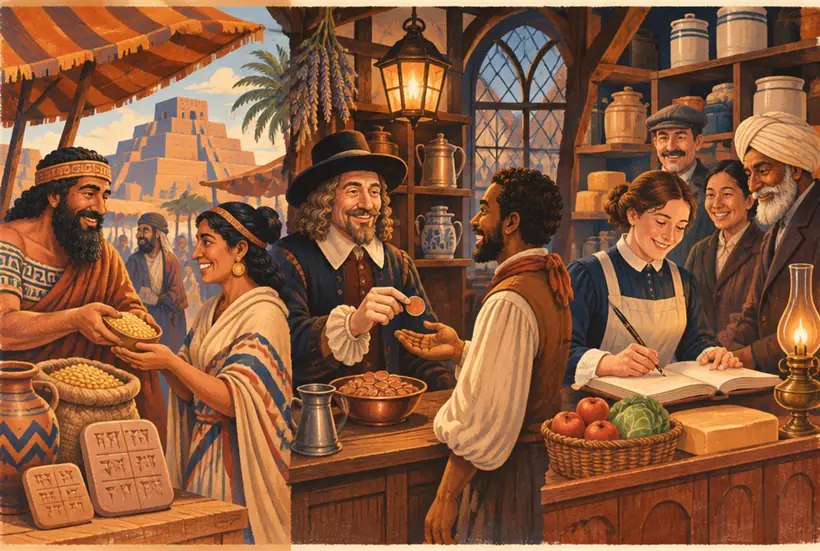
Illustration blending an ancient grain market, a seventeenth-century shop handing over a copper token and a co-operative clerk writing in a ledger.
Illustration · AI-generated

Act I · Ancient times to the 1840s

Roots: trust, tokens and dividends

Before anyone called it a loyalty programme, merchants relied on memory, small tokens and, later, member dividends.

Illustrative reconstruction of a grain seller and customer exchanging goods in an ancient market.
Illustrative reconstruction

How it worked

  1. 1Exchange goods
  2. 2Remember obligations
  3. 3Return through trust

01 / 12Ancient societies

Exchange & memory

A precursor, not a points programme

Trade depended on people, reputation and durable records. These are precursors, not proof of ancient points programs.

Long before loyalty accounts, people needed ways to remember an exchange. Ancient records show commerce and obligations, rather than evidence of a points-and-rewards scheme.

The lesson for today

A relationship starts with a useful exchange and a promise kept. Rewards work best when the underlying service gives people a reason to return.

Pixalink today: Referrals
Source: Museum research
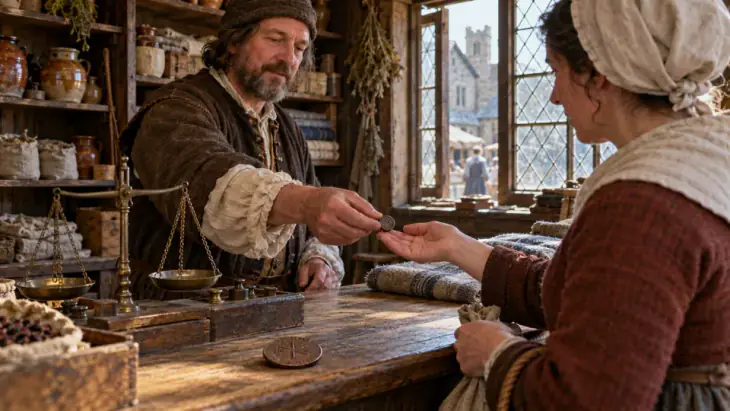
Illustrative reconstruction of a seventeenth-century shopkeeper handing a small merchant token to a customer.
Illustrative reconstruction

How it worked

  1. 1Build a relationship
  2. 2Record or issue a claim
  3. 3Return to the issuer

02 / 121100s–1600s

Merchants & tokens

A precursor, not a points programme

Letters connected distant merchants. Locally redeemable tokens could bring people back without being an earned bonus.

Merchant correspondence supported relationships across distance. Some local tokens served as small change redeemable with an issuer; their function was different from a reward for spending.

The lesson for today

Make it clear what a customer holds and how it can be used. A token used as change and a bonus earned through purchases serve different purposes.

Pixalink today: Credit Wallet

Source: Museum Wales
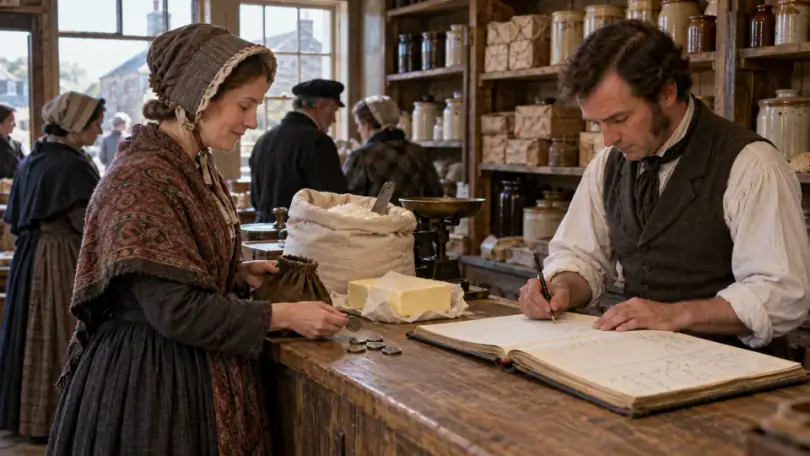
Illustrative reconstruction of a co-operative grocery clerk recording a member’s purchase in a ledger.
Illustrative reconstruction

How it worked

  1. 1Buy as a member
  2. 2Record patronage
  3. 3Receive a dividend

03 / 121844 onward

Members & dividends

A chapter in loyalty

Co-operative members linked their purchases to a share of distributable surplus.

The Rochdale Pioneers opened their store in 1844. Co-operative patronage linked the member’s purchasing relationship with a share of distributable surplus.

The lesson for today

A membership should offer understandable value. Explain how participation connects to the benefit, and make the record easy to follow.

Pixalink today: Paid Membership

Source: Co-operative News
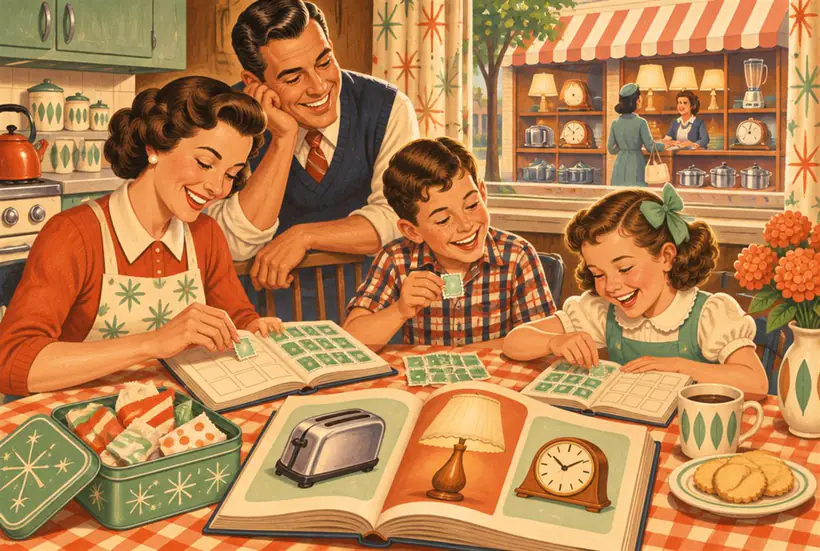
Illustration of a mid-century family pasting green trading stamps into books beside a premium catalogue of household goods.
Illustration · AI-generated

Act II · 1850s to the 1970s

Collecting: premiums and stamps

Wrappers, coupons and trading stamps turned everyday buying into a collection you could see, count and exchange.

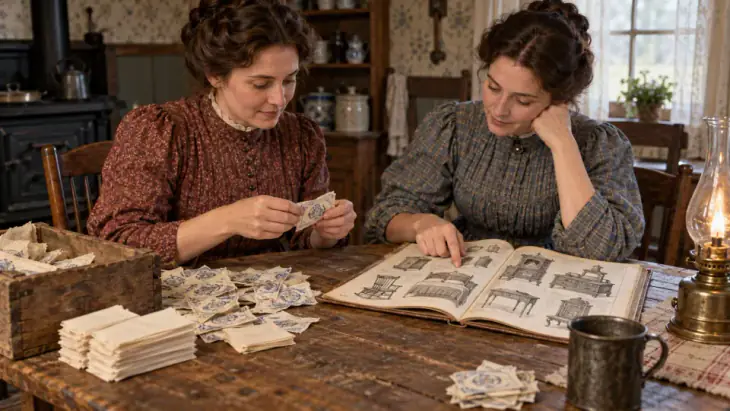
Illustrative reconstruction of two women collecting product wrappers beside a household premium catalogue.
Illustrative reconstruction

How it worked

  1. 1Buy the product
  2. 2Save the evidence
  3. 3Claim a premium

04 / 121850s–1890s

Wrappers & premiums

A chapter in loyalty

Proof of purchase could accumulate toward a household object. Coupons offered a different kind of invitation.

Household purchases could lead to another tangible benefit. Saved wrappers and other proof of purchase connected repeat buying with goods offered in a premium catalogue.

The lesson for today

Make qualifying actions easy to understand. Customers should know what to collect, how much is needed and what they receive.

Pixalink today: Rewards & Vouchers

Source: The Henry Ford
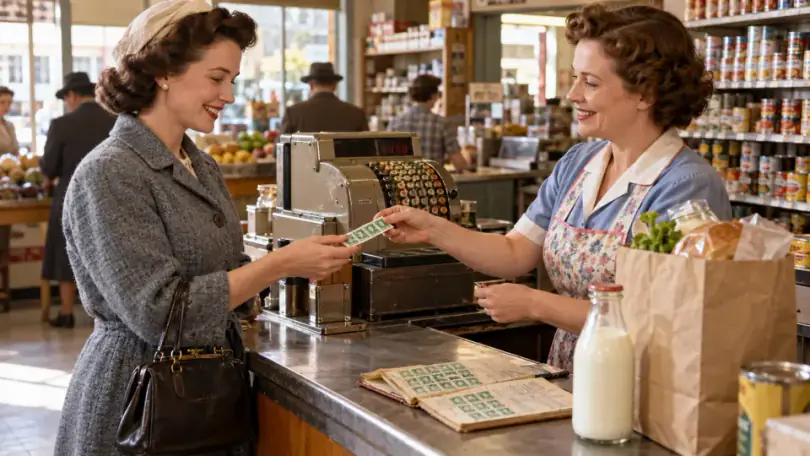
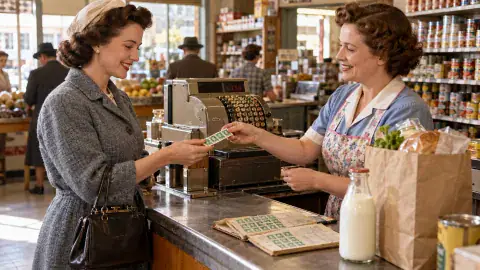
Illustrative reconstruction of a mid-century grocery cashier giving a customer green trading stamps.
Illustrative reconstruction

How it worked

  1. 1Receive stamps
  2. 2Fill a collection book
  3. 3Choose a reward

05 / 121890s–1970s

Stamps & catalogues

A chapter in loyalty

Shared reward networks turned small purchases into a visible collection and a choice of merchandise.

Trading stamps made accumulation physical. Customers received stamps on purchases, collected them in books and exchanged completed collections for merchandise.

The lesson for today

Show progress. Whether it is a paper book or a digital stamp card, the next step toward a reward should be visible.

Pixalink today: Digital Stamp Cards

Source: Original historical source
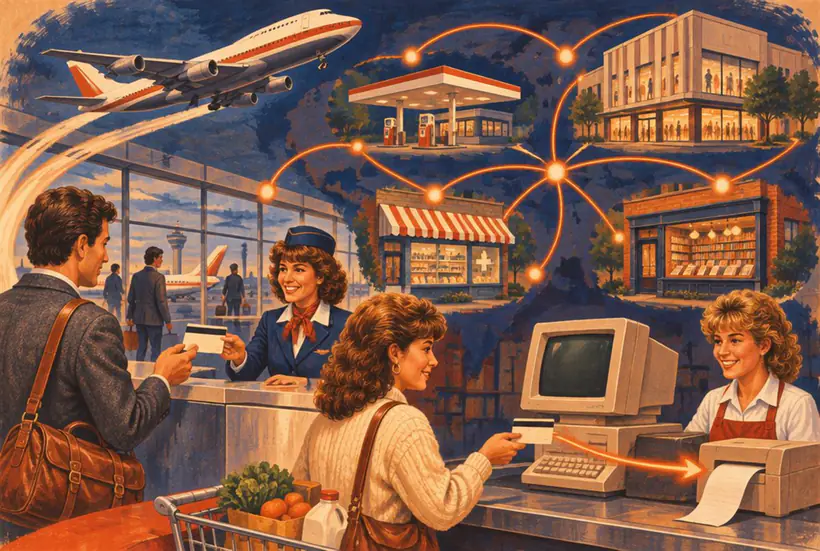
Illustration of a 1980s airport counter, a supermarket card linked to a computer receipt and a glowing network connecting several shops.
Illustration · AI-generated

Act III · 1979 to the 2000s

Accounts, data and networks

Named accounts remembered every journey and purchase, and coalitions let one membership travel across many businesses.

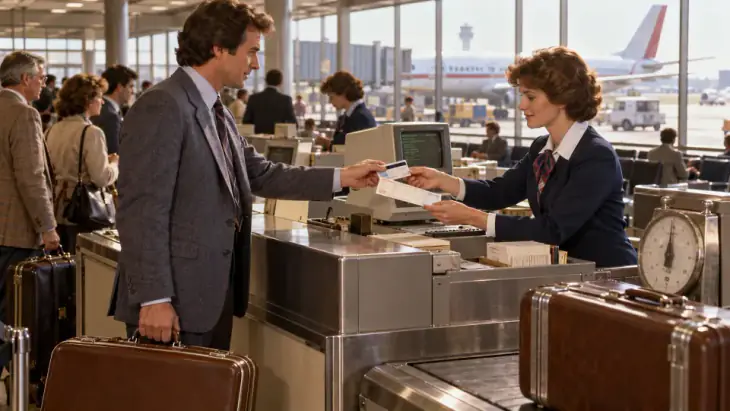
Illustrative reconstruction of an early-1980s traveller presenting membership details at an airport counter.
Illustrative reconstruction

How it worked

  1. 1Identify the traveller
  2. 2Accumulate activity
  3. 3Redeem or qualify

06 / 12Late 1970s–1990s

Miles & recognition

A chapter in loyalty

Named accounts connected separate journeys, while status changed the experience of service.

AAdvantage launched in 1981. Frequent-flyer accounts connected individual journeys to a continuing balance, while recognition and status added another reason to stay with a programme.

The lesson for today

Recognise the ongoing relationship. A balance remembers activity; a well-designed membership can also recognise the customer.

Pixalink today: Membership Tiers

Source: American Airlines
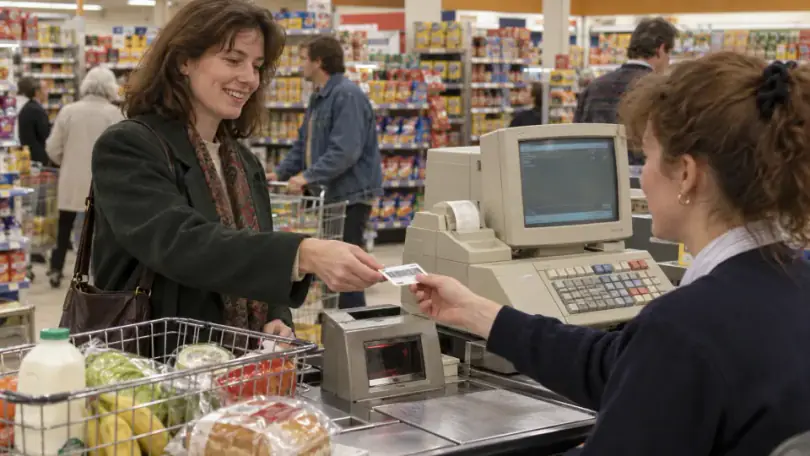
Illustrative reconstruction of a 1990s grocery checkout linking a membership card to a purchase.
Illustrative reconstruction

How it worked

  1. 1Identify the customer
  2. 2Link purchase history
  3. 3Personalise communication

07 / 121990s onward

The customer record

A chapter in loyalty

Digital identity connected transactions to customer histories and more selective communications.

Retail programmes such as Tesco Clubcard connected a customer identity to a purchase history. Rewards became part of a more informed, continuing conversation.

The lesson for today

Use customer information to make communication more useful. Collect only what you need and respect the choices people make.

Pixalink today: Customer CRM

Source: Tesco annual review
Illustrative reconstruction of a Malaysian department-store customer using a shared rewards membership.
Illustrative reconstruction

How it worked

  1. 1Shop with a partner
  2. 2Pool eligible activity
  3. 3Redeem across the network

08 / 121990s–2000s

One account, many partners

A chapter in loyalty

Coalitions connected earning and redemption across participating businesses and everyday categories.

BonusLink began in Malaysia in 1998. Coalition programmes brought participating businesses together around one member account, linking rewards with more everyday purchases.

The lesson for today

A network is useful when participation is clear. Customers need to know where they can earn, where they can redeem and which rules apply.

Pixalink today: Multi-Merchant Loyalty

Source: Parkson / BonusLink
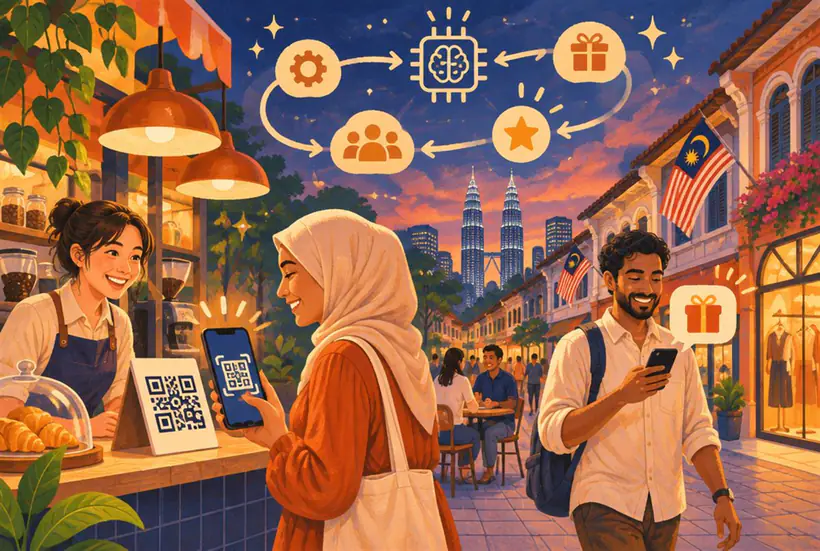
Illustration of a Malaysian street café at dusk where a customer scans a QR code and another receives a reward message, with simple automation and AI symbols above.
Illustration · AI-generated

Act IV · 2000s to today

Connected and intelligent

Phones, automated journeys and prediction moved the relationship between visits. The next chapter keeps people in control.

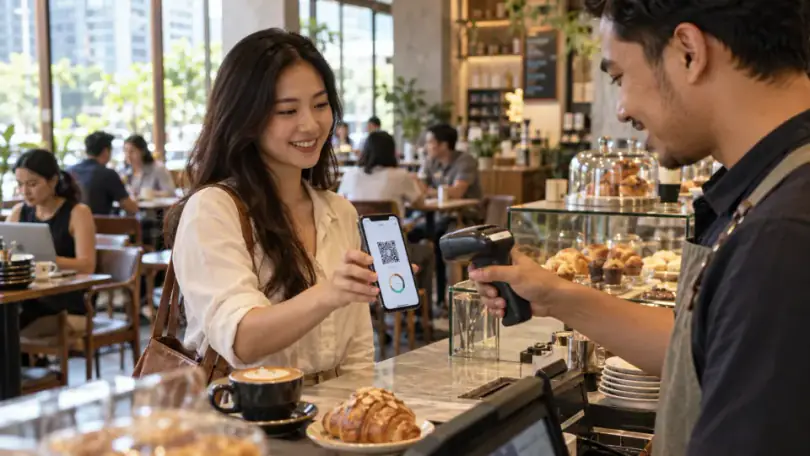
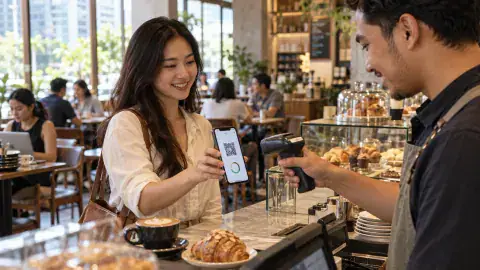
Illustrative reconstruction of a café customer presenting a phone-based rewards account.
Illustrative reconstruction

How it worked

+10 pts
  1. 1Join the membership
  2. 2Earn or access benefits
  3. 3Use them in daily life

09 / 122000s–2010s

Online & in your pocket

A chapter in loyalty

E-commerce, paid memberships and smartphones placed benefits inside a connected customer experience.

The membership moved beyond a card in a wallet. Online accounts, paid benefits and mobile experiences made it easier to take the relationship between channels.

The lesson for today

Keep everyday actions simple on a phone: joining, checking a balance and using a benefit should feel easy.

Pixalink today: Loyalty Customer Portal

Source: Starbucks announcement
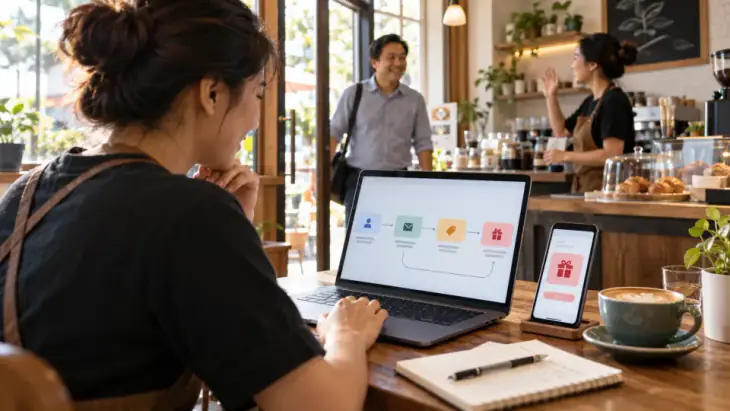
Illustrative reconstruction of a café operator reviewing a configured customer follow-up journey.
Illustrative reconstruction

How it worked

EventRuleMessage
  1. 1Observe an event
  2. 2Apply a defined rule
  3. 3Send a permitted response

10 / 122000s onward

Engagement between visits

A chapter in loyalty

Events and conditions could trigger useful follow-up without someone selecting each recipient manually.

A visit, a sign-up or a date could become a trigger. Defined conditions helped businesses follow up between transactions without choosing each recipient manually.

The lesson for today

Start with one useful moment, such as a welcome or birthday. Define eligibility, timing and communication preferences before turning on a journey.

Pixalink today: Omni-channel Marketing

Source: How triggered journeys work
Illustrative reconstruction of a team comparing campaign options with software assistance.
Illustrative reconstruction

How it worked

  1. 1Estimate and propose
  2. 2Select within constraints
  3. 3Measure the outcome

11 / 122010s–2020s

Prediction & creation

A chapter in loyalty

Models help predict responses, generate campaign material and choose among eligible actions.

A 2019 Microsoft case study described personalised Starbucks app recommendations. Prediction and content generation add ways to select a relevant next interaction within business rules.

The lesson for today

Test relevance, not just novelty. Evaluate whether a recommendation helps the customer and whether it produces a measurable improvement.

Pixalink today: Loyalty Analytics

Source: Microsoft case study
Illustrative concept of a Malaysian business team reviewing decisions and results under brand control.
Illustrative reconstruction

How it worked

SetTestMeasureLearn
  1. 1Set the objective
  2. 2Test an approved action
  3. 3Learn under brand control

12 / 12Emerging direction

A brand that learns

An emerging direction

A proposed brand-governed loop connects decisions, experiments and controlled improvement.

The next idea is a controlled learning loop: connect customer context, approved decisions and measured outcomes. This is an emerging architecture, with human judgment and clear limits.

The lesson for today

Keep people and business rules in control. This is a proposed direction, not a claim that Pixalink already provides an autonomous loyalty engine.

Pixalink today: Loyalty Program

Source: NIST AI Risk Management Framework

Spotlight: S&H Green Stamps

How S&H Green Stamps worked

Sperry & Hutchinson issued trading stamps from 1896. Shops bought the stamps, handed them out with purchases and shoppers pasted them into books to swap for merchandise.

1 stamp

for every 10¢ spent, typically

1,200

stamps to fill one book

850

S&H redemption centres (1964)

60%+

of American consumers saved them (1964)

Figures from the US Supreme Court record, FTC v. Sperry & Hutchinson Co., 405 U.S. 233 (1972), describing 1964.

Try it: fill a stamp book

1,200 stamps · 1 full book · about US$2.86–3.31 of merchandise

Each square is 50 stamps. A full book bought about US$2.86–3.31 of merchandise in 1964, roughly 2.4–2.8% of the spend that earned it (our calculation from the court record).

The paper book’s digital successor: Digital Stamp Cards

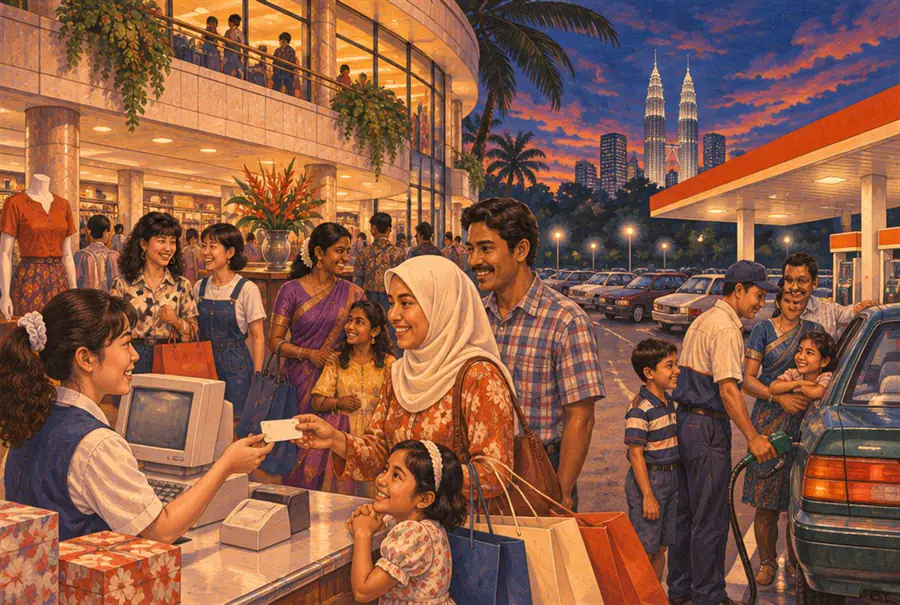
Illustration of late-1990s Kuala Lumpur: shoppers at a department store counter hand over a plain rewards card while a family refuels at a petrol station, with the city skyline at dusk.

Illustrative reconstruction · AI-generated

Malaysia spotlight

Loyalty programs in Malaysia

Malaysia’s best-known coalition, BonusLink, launched in 1998, bringing participating businesses together around one member account. Many Malaysian shoppers have carried a points card ever since.

1998

BonusLink launches as a coalition rewards programme. Source

2022

Pixalink Sdn Bhd is founded in Kuala Lumpur on 7 September.

2025

Pixalink launches its first Mini Program: a branded loyalty portal with no app download.

2026

Pixalink’s AI Predictive Loyalty Engine is in development.

Quick quiz

Which era is your loyalty programme in?

Answer four questions. Nothing is sent anywhere; the result appears on this page.

1How do customers track their progress?
2What do you know about each customer?
3How do you follow up between visits?
4How do you choose offers?

FAQ

History of loyalty programs: questions

Want to start your own chapter? Talk to our team or browse all features.

What was the first loyalty program?

There is no single established first. Co-operative dividends (Rochdale, 1844), premiums for saved soap wrappers (B.T. Babbitt, as early as 1851) and trading stamps (Sperry & Hutchinson, from 1896) developed for different purposes. The often-repeated 1793 copper-token story is not well documented, and ancient exchange and accounting are precursors, not proof of ancient points programmes.

What were S&H Green Stamps and how did they work?

Sperry & Hutchinson issued trading stamps from 1896. Retailers bought the stamps and gave them to shoppers, typically one for every 10 cents spent. Shoppers pasted them into books of 1,200 and exchanged full books for merchandise at S&H redemption centres; in 1964 there were about 850 centres and more than 60% of American consumers saved the stamps, according to the US Supreme Court record.

How have loyalty programs evolved?

The mechanic changed from tokens and dividends to premiums and stamps, then to named accounts with miles and status, customer data, coalition cards, mobile apps, automated journeys and AI-assisted decisions. Each step made it easier to remember the customer, show progress and give a reason to return.

Did airlines invent customer loyalty?

No. American Airlines launched AAdvantage on 1 May 1981, and airline histories record an earlier mileage programme at Texas International in 1979. Airline programmes made rewards an ongoing named account with recognition and status, but earlier ways to encourage return purchases already existed.

Are trading stamps the same as points?

They share the idea of accumulating activity toward a reward. Trading stamps were physical and often linked participating merchants; digital points record activity in a member account and can be converted into vouchers.

When did coalition rewards reach Malaysia?

BonusLink’s Malaysian rewards history began in 1998. This is a documented example, not a claim that Malaysia had no earlier forms of customer loyalty.

Are these historical photographs?

No. All images on this page are AI-generated illustrations or historical reconstructions. They do not show verified artefacts, specific historical individuals or actual software interfaces.

Is autonomous AI loyalty a current Pixalink feature?

No. The final era describes a proposed direction for learning under brand control. Pixalink’s AI Predictive Loyalty Engine is in development in 2026; this page does not claim that Pixalink currently provides every capability described.

Write your next chapter

Start with one customer journey you want to improve.

In a 30-minute demo we map your customer journey and show the loyalty setup that fits it.