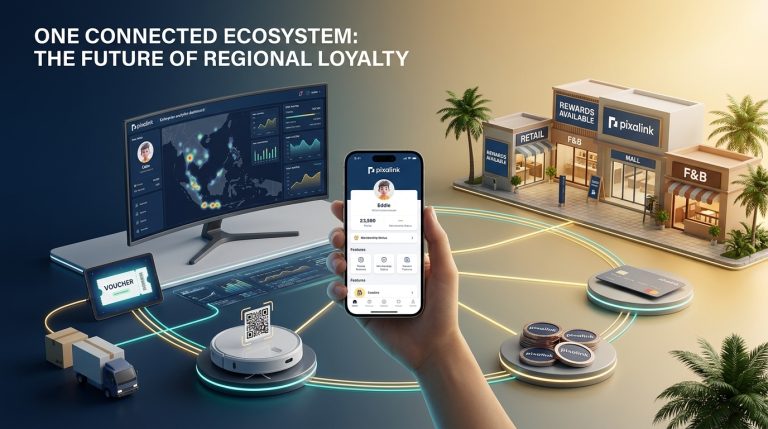

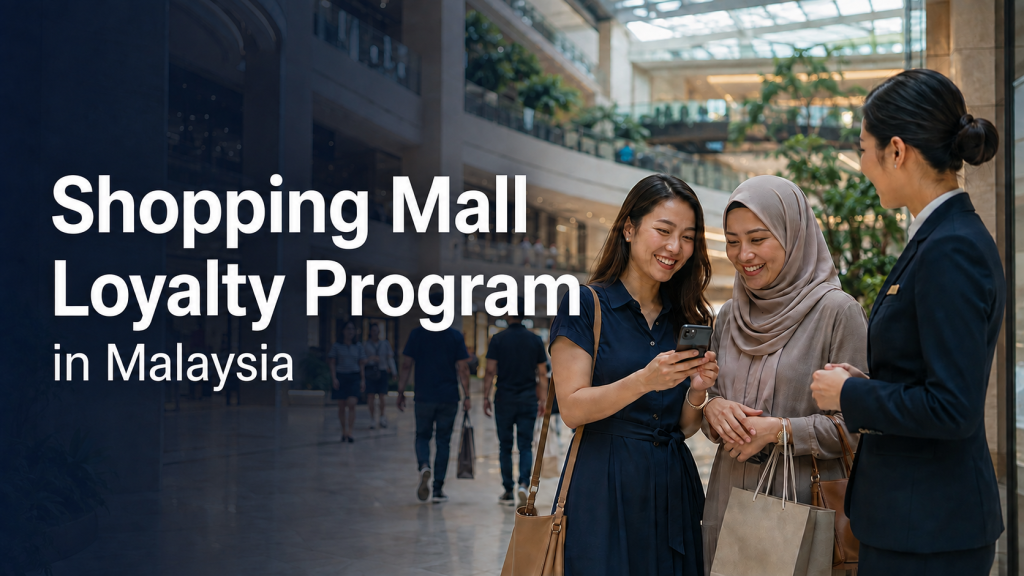
A shopping mall loyalty program in Malaysia can help operators turn passing visitors into identifiable, returning shoppers. By connecting membership, loyalty points, digital vouchers and customer data, a mall gains a way to understand participating shoppers, encourage another visit and measure activity across participating tenants.
The programme also needs to work behind the scenes. If a shopper earns points at a fashion store and uses them at a restaurant, the operator must know who funds the reward, who receives reimbursement and how the transactions are reconciled.
Pixalink brings these requirements together through a configurable enterprise solution for shopping malls, including multi-merchant management, cross-vouchers and settlement. The starting point is a clear operating model that fits the mall’s tenants, shoppers and budget. Explore Pixalink’s shopping-mall enterprise offering.
Why a shopping mall needs its own loyalty programme
Tenants may already have their own membership systems. A mall programme gives shoppers an additional reason to return to the destination and explore other participating stores.
For management, it creates a direct relationship with members that can continue after they leave the building.
Consider an illustrative campaign: a shopper makes an eligible fashion purchase, earns mall points and receives an offer for a participating café on their next visit. The mall can connect the qualifying purchase, reward and subsequent redemption. It can then assess whether the campaign is encouraging the behaviour it intended.
That creates several practical benefits:
- Encourage repeat visits. Give shoppers a relevant reason to return, such as a reward with a clearly communicated validity period.
- Support participating tenants. Introduce members to stores and categories they have not previously purchased from within the programme’s recorded history.
- Improve campaign decisions. Compare reward use, qualifying purchases and repeat activity instead of relying only on impressions or registrations.
- Build a useful customer database. Connect membership details with recorded purchases, points and voucher activity.
- Improve operational visibility. Give marketing, customer service and finance a consistent view of programme transactions.
These benefits depend on shopper participation, tenant coverage and reliable data. Loyalty records describe the activity captured by the programme; they do not automatically represent all mall footfall or sales.
What Malaysian mall programmes can teach operators
Malaysia already provides useful examples of different loyalty approaches.
Sunway Super App combines points with privileges and rewards at participating merchants. Its published FAQs describe earning and using Sunway Points, while its rewards promotions include digital vouchers. This demonstrates how points and offers can sit within one customer relationship. Sunway Super App FAQs.
Pavilion Privileges uses membership categories with spending qualification requirements and member benefits. It illustrates another programme design choice: rewarding a shopper’s relationship with the destination through status and privileges. Pavilion Privileges.
An operator should select a model that suits its tenant mix. A neighbourhood mall might focus on frequent grocery and dining visits. A destination mall might place more emphasis on cross-category shopping, events and membership privileges. These are planning examples; neither programme is presented here as a Pixalink client.
How to create a shopping mall loyalty program
Before selecting features, bring mall management, marketing, tenant relations, finance, IT and customer service into the same planning discussion.
1. Choose the first business objective
Start with one priority, such as increasing recorded repeat visits, encouraging purchases across more participating tenants or improving the performance of weekday campaigns.
Define the measure before launch. For example, track the proportion of newly enrolled members who make a second qualifying purchase within 60 days. Only include members who have had the full 60-day observation period.
A focused objective makes it easier to choose rewards, set a budget and judge the pilot.
2. Agree how tenants will participate
Each participating tenant needs clear terms covering eligible transactions, reward funding, cashier responsibilities, refunds, reporting and settlement.
A tenant may contribute to base points, accept mall-funded vouchers or sponsor its own offer. Those arrangements need to be recorded separately.
Tenant participation also needs a commercial reason: access to a relevant member audience, a measurable promotion and a clear reimbursement process.
3. Design a simple shopper journey
A practical journey is:
Join the mall programme → identify the member → record an eligible purchase → award points → claim or use a reward → invite a return visit.
Keep registration short and explain the benefits, earning rules and marketing choices clearly.
Pixalink provides a branded customer portal that shoppers can use without downloading a separate app. Members can access their points, rewards and membership information through that portal. Pixalink customer loyalty platform.
4. Decide how purchases will be verified
Different tenants may need different methods:
| Method | When it can help | What to resolve before launch |
|---|---|---|
| Supported POS integration | Tenants with compatible systems and sufficient transaction volume | Member matching, eligible spend, duplicate transactions, refunds and connection failures |
| Receipt submission | A mall with a mixed tenant POS environment | Receipt ownership, validation, duplicates, exclusions and processing time |
| Authorised staff entry | A controlled pilot or service-counter workflow | Staff permissions, required evidence, adjustments and review |
Pixalink’s enterprise offering includes receipt-based and integration options. The suitable combination should be agreed for the mall’s implementation. Pixalink enterprise loyalty overview.
Receipt scanning can assist data entry; the operator still needs a policy for validation and exceptions.
5. Confirm funding and settlement before issuing points
Decide whether the mall, tenants or campaign sponsors fund each reward. Then agree how finance will calculate amounts due and resolve disputes.
A clear funding model protects the programme’s budget and gives tenants confidence in participating.
Design a loyalty points system shoppers can understand
A point management system must keep an accurate history of earning, use, expiry and adjustments. Its rules must also be easy for shoppers and staff to explain.
Illustrative programme economics: suppose members earn one point per RM1 of eligible spend, and 100 points provide RM1 of reward value. RM200 of eligible spending earns 200 points, worth RM2 under those rules. The nominal reward value is 1% of eligible spend before promotions, expiry and other programme costs.
That example is a planning illustration, not a recommended rate for every mall or a Pixalink price.
Document the main rules:
- Eligible tenants, purchases and excluded items.
- Whether qualifying spend is calculated before or after discounts, taxes and other charges.
- Earning rate, rounding and any minimum purchase.
- Bonus-point funding, campaign caps and eligibility.
- Redemption value, minimum balance and participating redemption locations.
- Expiry, communication and treatment of unused points.
- Refunds, cancellations, adjustments and dispute handling.
- Whether a purchase paid partly with rewards earns further points.
The customer’s visible balance should be explainable from the transaction history. Staff should be able to trace a change to its purchase, redemption or authorised adjustment.
Pixalink’s points capabilities include purchase-related earning, reward deductions, tier multipliers, expiry and transaction history. Pixalink loyalty points system.
Keep loyalty points, promotional vouchers and prepaid wallet balances distinct in programme rules and financial reports. A shared interface does not make them the same type of value.
Use a voucher management system to control every reward
Vouchers give the mall a flexible way to encourage a specific action. Points provide an ongoing incentive; a voucher can support a welcome offer, birthday visit, tenant opening or seasonal campaign.
Useful mall campaign ideas include:
- A welcome voucher usable after a first qualifying purchase.
- A weekday dining offer at participating restaurants.
- A reward for eligible purchases across two shopping categories.
- A tenant-sponsored opening offer with a fixed allocation.
- A Hari Raya, Chinese New Year or Deepavali campaign with a defined funding limit.
These are campaign concepts to configure and validate for the chosen implementation.
For each voucher, define its owner, funder, eligible members, participating tenants, value, minimum spend, validity, quantity cap and reimbursement rule. State whether it can be combined with other offers.
Issuing a voucher is different from using it. A shopper might claim an offer and never redeem it at a tenant. Reports should distinguish issued, available, used, expired and cancelled vouchers, and finance should use the status required by the funding agreement.
Cashiers need to validate eligibility and current status at redemption. A screenshot alone should not be treated as proof that a voucher is valid and unused.
Pixalink supports digital voucher distribution, reward exchange and redemption controls. Mall-specific acceptance and funding rules belong in the agreed enterprise setup. Pixalink voucher management system.
How tenant points reconciliation and settlement work
Settlement is central to a shared mall loyalty programme.
The tenant where points are earned may differ from the tenant providing the reward. The mall owner therefore needs a consistent method to allocate funding and reimburse participating tenants.
Reconciliation checks that purchases, points, redemptions, refunds and adjustments agree. Settlement determines the amounts each party must pay or receive under the programme agreement.
Pixalink offers settlement within its shopping-mall and multi-entity enterprise scope. The allocation method, reporting and payment workflow are configured around the mall owner’s rules. Pixalink Custom Enterprise scope.
A simple three-tenant settlement example
The following is a hypothetical monthly example. Assume each point has RM0.01 of redemption value, tenants fund issued points at that rate, and eligible redemptions are reimbursed at the same rate. There are no opening balances, expired points, refunds, fees or taxes in this simplified model.
| Participating tenant | Points issued | Funding due for points issued | Reimbursement for rewards accepted | Net settlement with mall |
|---|---|---|---|---|
| Fashion store A | 10,000 | RM100 | RM30 | Pays RM70 |
| Restaurant B | 5,000 | RM50 | RM120 | Receives RM70 |
| Bookstore C | 5,000 | RM50 | RM10 | Pays RM40 |
| Total | 20,000 | RM200 | RM160 | Mall retains RM40 in programme funding |
Restaurant B receives RM70 because it accepted more reward value than the funding it owes for issuing points.
The remaining RM40 corresponds to 4,000 unredeemed points in this example. It remains available to fund future redemptions under the assumed model. It is not automatically mall profit.
Real programmes may use mall-funded points, tenant contributions, sponsor budgets, agreed discounts or a shared funding pool. Finance should document when funding is collected, how unused value is treated and how accounting treatment is determined.
What the mall owner should be able to reconcile
A useful settlement statement should identify the period, tenant, opening position, funded points or vouchers, eligible redemptions, reversals, adjustments and net amount due. Each amount needs a traceable supporting record.
Agree how to handle:
- Points earned at one tenant and redeemed at another.
- Bonus points paid for by the mall or a sponsor.
- A refunded purchase after its points have already been used.
- Duplicate or disputed claims.
- Transactions arriving after a period closes.
- Tenants joining or leaving the programme.
- Approval, payment confirmation and corrections.
For example, a refund at the issuing tenant may affect the shopper’s points and the funding calculation. The agreement must determine the treatment when another tenant has already supplied a valid reward.
Settlement reports establish amounts due. Any automated bank payments or accounting-system connection must be included explicitly in the implementation scope.
Capture customer data that improves mall decisions
A shopping mall CRM should help management answer practical questions about participating members:
Which members are returning? Which categories do they buy from? Which offers are used? Which previously active members have stopped recording purchases?
Start with information that has a clear purpose.
| Data to capture | How the operator can use it |
|---|---|
| Member identity and necessary contact details | Maintain a consistent record and deliver programme communications |
| Signup source and date | Assess which registration channels bring active members |
| Recorded purchase date, tenant and eligible amount | Analyse frequency, spending and cross-tenant activity |
| Points and voucher history | Understand reward use and resolve queries |
| Optional interests or broad location information | Plan relevant offers and assess participating-member catchments |
| Notice version, consent and communication preferences | Respect choices and maintain evidence of permitted use |
A practical segment might be members with a previous recorded dining purchase and no further qualifying activity for 60 days. A relevant return offer can then be tested against that audience.
Pixalink connects customer profiles, loyalty activity and customer engagement through its CRM offering. The available segments and reports depend on captured data and the configured programme. Pixalink loyalty CRM.
Measure data quality alongside database size. Duplicate profiles, missing tenant identifiers and unrecorded refunds make reports less reliable. Also monitor the proportion of participating transactions successfully linked to a member.
Build Malaysian data protection into registration
Malaysia’s Personal Data Protection Act and related guidance should inform programme design. Present a clear privacy notice at collection, explain purposes and relevant disclosures, and record consent appropriately. The Commissioner’s notice guidance distinguishes a privacy notice from blanket consent. Official privacy-notice guidance.
As an operating practice, collect only what the programme needs, define retention periods, restrict staff and tenant access, and provide a route to update details and communication choices. A shared mall programme should not automatically give every tenant unrestricted access to the entire member database.
Have the mall’s privacy lead confirm applicable obligations, including data-controller arrangements, DPO requirements and breach procedures. Current guidance is available from the Malaysian Personal Data Protection Commissioner.
What an enterprise-grade mall loyalty solution should deliver
Mall operators need to assess how the programme works for shoppers, tenants and internal teams.
When evaluating loyalty program software in Malaysia, ask the provider to demonstrate the full transaction journey: registration, purchase verification, points, voucher use, refund handling, tenant reporting and settlement.
For your proposed deployment, establish:
- Clear access for mall management, tenants, cashiers and finance.
- Traceable records of points, vouchers and authorised changes.
- A process for duplicate transactions and failed integrations.
- Reporting that matches the programme’s funding rules.
- Data export, retention and migration arrangements.
- Agreed hosting, backup, recovery and support responsibilities.
- Performance validation against anticipated peak activity.
Pixalink provides an enterprise foundation with configurable access, integrations and implementation options. Mall-specific requirements, support commitments and acceptance criteria should be included in the proposal. Pixalink enterprise platform.
An affordable approach to comprehensive mall loyalty
An affordable programme needs a manageable total cost over its life.
A mall should budget for the software subscription, implementation, data migration, tenant onboarding, integrations, messaging usage, support and the rewards themselves. Custom settlement and reporting requirements also affect scope.
Pixalink allows operators to combine the customer portal, points, vouchers, CRM and engagement functions within one platform, with enterprise services matched to the operating model. Consultation, onboarding, migration and operational support can be scoped to help the mall from planning through rollout. Pixalink plans and delivery services.
A practical way to control cost is to launch with a representative tenant group, straightforward points rules and a small set of useful rewards. Expand after the shopper journey, tenant workflows and settlement have been demonstrated.
Request a proposal that separates:
| Cost component | What to clarify |
|---|---|
| Recurring platform cost | Included capacity, users, entities, modules and support |
| One-time implementation | Programme configuration, migration, training and launch work |
| Integrations and customisation | POS connections, receipt workflow, settlement and reporting |
| Usage and third-party charges | Messaging, provider services and other variable costs |
| Reward funding | Mall, tenant and sponsor contributions and reimbursement obligations |
Pixalink’s shopping-mall and multi-merchant solutions are quotation-based. This lets the proposal reflect the mall’s requirements; a small-business subscription price alone would not describe the complete cost of a mall programme.
A practical launch checklist for mall operators
Use this checklist to prepare the first implementation discussion:
- Name the programme owner. Assign marketing, tenant relations, finance, IT and customer-service responsibilities.
- Set the objective and baseline. Define the behaviour to improve and how it will be measured.
- Select representative tenants. Include different categories, transaction volumes and POS arrangements.
- Approve earning, voucher and funding rules. Make the shopper terms and tenant agreement consistent.
- Prepare customer-data handling. Agree collection, notices, communication preferences and access.
- Test complete transactions. Include purchase, duplicate receipt, reward use, refund, expiry and a failed connection.
- Run a trial settlement. Reconcile sample transactions and obtain finance and tenant agreement on the statement.
- Train frontline teams. Provide simple instructions and an escalation route.
- Review the pilot. Resolve friction and data gaps before expanding participation.
Choose the rollout schedule after assessing integrations, data readiness and tenant training.
Measure participation, repeat activity and cost together
A useful monthly review includes active participating tenants, first qualifying purchase rate, repeat purchase activity, cross-tenant shopping, voucher redemption, outstanding points and settlement exceptions.
Define each measure consistently. For voucher redemption, compare vouchers used with eligible vouchers issued in the same campaign cohort, allowing for their validity period.
Recorded member spending is not automatically revenue created by the programme. Where practical, compare campaign results with an appropriate control group or a carefully chosen baseline. Existing frequent shoppers may be more likely to join, so member-versus-non-member spending alone does not establish uplift.
Frequently asked questions
What is a shopping mall loyalty program?
It is a membership programme operated across participating mall tenants. It connects shopper identity, eligible activity and rewards under shared rules, giving the operator a direct relationship with members and visibility into recorded programme activity.
Can shoppers earn points at one tenant and use them at another?
Yes, when the programme supports cross-tenant earning and redemption. The mall must agree participating locations, conversion rules, funding and settlement so the tenant accepting the reward receives the correct treatment.
Do all tenants need the same POS system?
A mall can use a combination of supported integrations, receipt validation and controlled staff workflows. The implementation must establish consistent records, member matching and refund handling across those methods.
Do shoppers need to download a mall app?
Pixalink offers a branded web-based customer portal that does not require a separate app download. A native app or other customer touchpoint can be assessed if the mall has additional requirements.
How much does a mall loyalty system cost in Malaysia?
Cost depends on the member database, participating tenants, required functions, transaction volume, integrations, settlement model and service scope. Ask for a complete proposal that separates subscription, implementation, usage charges and reward funding.
Can Pixalink handle tenant point settlement?
Pixalink offers a settlement system within its shopping-mall and multi-entity enterprise solutions. Tenant-issued points and eligible redemptions can be reconciled into funding and reimbursement calculations according to the mall owner’s agreed rules. Detailed calculations, approvals and payment arrangements are scoped for the implementation.
Plan your shopping mall loyalty programme with Pixalink
Give shoppers a clear reason to return, tenants a programme they can confidently participate in, and management the data to make better decisions.
Pixalink can bring the customer experience, loyalty points, voucher management, CRM and customised tenant settlement together in one comprehensive solution for your mall.
Discuss your shopping mall loyalty programme with Pixalink. Bring your tenant count, existing POS systems, estimated member database and first business objective. The next step is a practical programme scope and quotation that fits your mall’s operating needs and budget.